




Awards and recognition
Research worth celebrating.
ISPC 2026 recognized promising research with 9 Best Paper Awards and 10 Young Scientist Awards across ten scientific tracks.
Meet the 2026 award recipients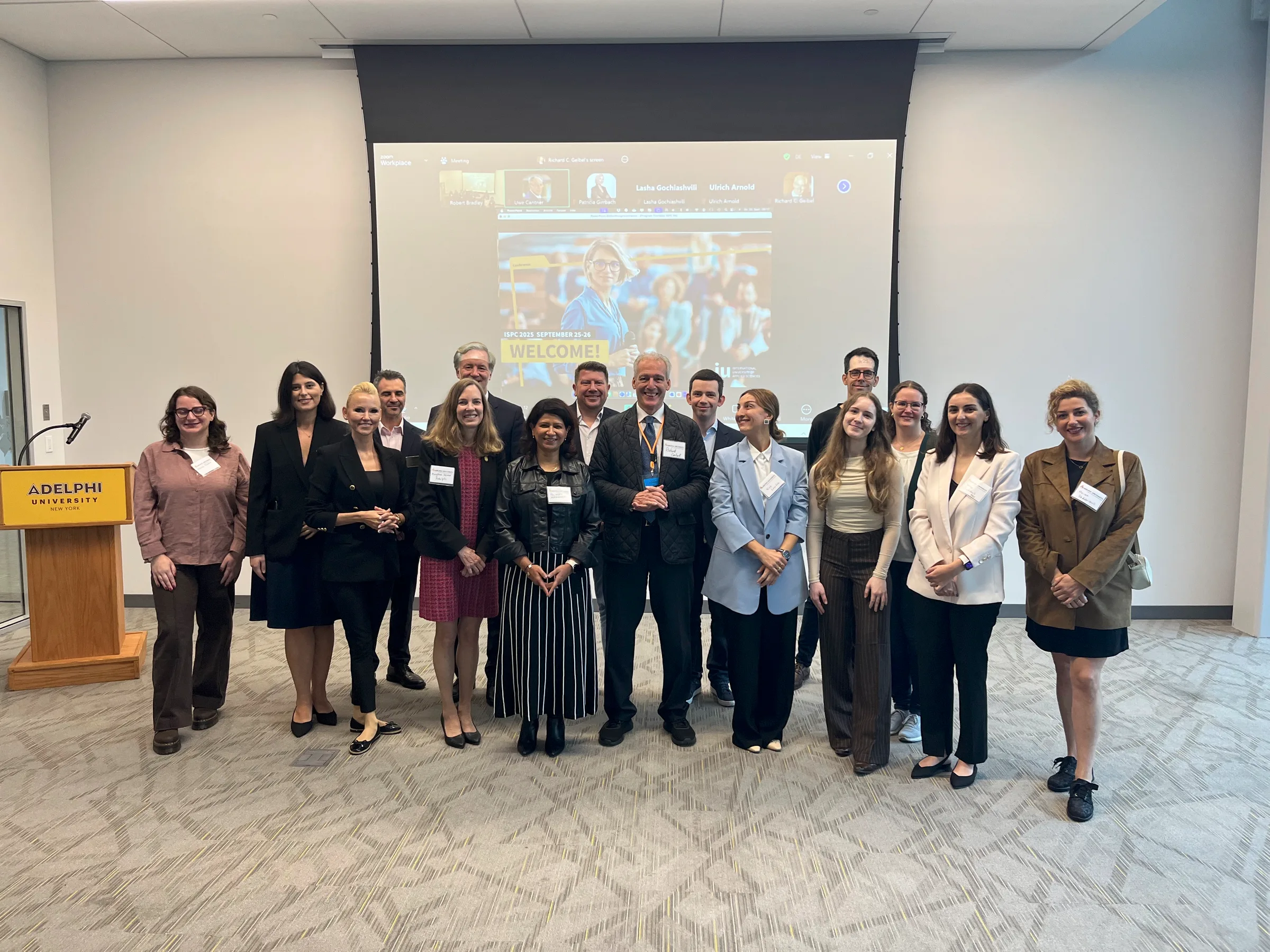
Conference retrospective
Digital and AI Management
Scientific Research and Practical Implementation
ISPC 2025 at Adelphi University, New York
The ISPC partnership
ISPC is a joint undertaking of five international institutions. Together they contribute academic expertise, international reach, conference organization and a shared commitment to researcher development.
Final ISPC 2026 management figures, verified 18 October 2026
An initiative within the ISPC
Promising ideas deserve thoughtful feedback. CBR develops our commitment to helping researchers strengthen their work through constructive guidance, scientific integrity and independent thinking — within and beyond the annual conference.
Explore the approach and planned support for students, early-career researchers and the wider research community.
Discover Create Better ResearchersLooking back at ISPC 2026
On Thursday, the E-Commerce Best Practice Day and ISPC 2026 formed one combined event with four parallel tracks. On Friday, the sixth ISPC continued with its final scientific program in ten parallel hybrid tracks.
Awards and recognition
ISPC 2026 recognized promising research with 9 Best Paper Awards and 10 Young Scientist Awards across ten scientific tracks.
Meet the 2026 award recipientsLooking ahead to ISPC 2027
As we prepare for the seventh ISPC in 2027, we are developing clearer submission workflows and opportunities to connect throughout the year. Confirmed conference details and the call for abstracts will be published here.
Explore how to get involvedFriday, 11 September
Moderated byWolfram Pietsch
Patricia Girrbach
Moderated byChristian Schachtner
Nino Tavberidze
Moderated byAlina Holle
Christian Pangaribuan
Moderated byDarius Zumstein
Ulrich Arnold
Moderated byIa Natsvlishvili
Nurdan Kavaklı Ulutaş
Moderated byTatia Gherkenashvili
Tinatin Rodonaia
Moderated byAnouk Hodel
Adele Dörner
Moderated byManuel Etzkorn
Yvonne Römer
Moderated byTeona Shugliashvili
Tea Munjishvili
Moderated byRichard Geibel
Annalena Sommer
The Friday scientific program was guided by 20 moderators working in pairs across ten parallel tracks. Conference record updated 18 October 2026. All times are CEST.
Richard Geibel
IU International University of Applied Sciences
Digitalization is profoundly transforming universities in Germany. Generative artificial intelligence (AI) opens new possibilities for the individualization, scaling, and quality improvement of learning and support processes. At the same time, challenges exist regarding pedagogical quality, governance, data protection, and academic integrity. This paper analyzes the potential benefits of university digitization with a focus on AI and discusses “Syntea” as a best practice - the learning assistant at IU International University, Germany’s largest university with over 130,000 students. It systematically outlines the benefits for students, faculty, and the university as an organization. The paper demonstrates that Syntea can be understood not merely as a chatbot, but as an integrated assistance approach to support learning, interaction, and academic success. Finally, success factors, limitations, and development perspectives for AI-supported higher education digitalization are derived.
digitalization of higher education · AI · generative AI · learning assistance · digital teaching · IU International University · Digital Education
 0009-0003-2064-9499
Annalena Sommer; Richard Geibel
IU International University of Applied Sciences
The convergence of social media and e-commerce has accelerated the evolution of social commerce and transformed digital purchasing behavior. While traditional customer journeys involve multiple stages of information search, evaluation, and transaction, recent developments indicate an increasing compression of these processes into highly integrated purchasing situations. Building on the concept of the Customer Moment, this paper examines the impact of TikTok Shop on social commerce in Germany one year after its launch in March 2025. The study adopts a qualitative case study approach based on academic literature, industry reports, platform information, and market observations. TikTok Shop is analyzed from both a consumer and a platform perspective using the concepts of social commerce, discovery commerce, platform ecosystems, and the Customer Moment. The findings indicate that TikTok Shop significantly reduces friction within the purchasing process by integrating product discovery, social validation, transaction processing, payment, and fulfillment within a single platform environment. From a consumer perspective, this integration facilitates Customer Moments, in which product discovery, evaluation, recommendation, and purchase increasingly occur within a single interaction. From a platform perspective, the study suggests that TikTok Shop may represent the first large-scale implementation of Fully Integrated Social Commerce (FISC) in Germany, extending earlier social commerce models that relied on external transaction infrastructures. The analysis also identifies important limitations. Regulatory requirements, privacy concerns, consumer trust issues, and cultural differences continue to influence social commerce adoption and distinguish the German market from more mature social commerce ecosystems such as China. The paper contributes to the literature by extending the Customer Moment framework and introducing FISC as a complementary platform-level perspective. The findings suggest that FISC provides the structural foundation for Customer Moments and may represent the next stage in the evolution of social commerce.
Social Commerce · Customer Moment · Fully Integrated Social Commerce · Customer Journey · Discovery Commerce · TikTok Shop · Platform Economy
0009-0003-2064-94990009-0002-6564-9516Merium Hazem Anwar Labib Bishara; Dr. Anriette Michel Fouad Bishara
International Black Sea University
The Artificial Intelligence (AI) technologies are becoming more and more common in people's daily lives. They are usually employed in a range of fields, from finance to healthcare, to assist with decision-making processes and/or provide content. The capacity of AI systems to affect both real-world and virtual surroundings is one of its distinguishing characteristics. This implies that the results generated by AI may have real-world implications. Yet, growing interest in the risks of AI and its governance has resulted from the widespread dissemination of these artifacts, their frequently opaque operation, and their accessibility outside of specialist groups. Concerns regarding the need to increase awareness of AI's risks have increased due to the technology's increasing usage and the new unexpected threats that appear every day. Even though a number of researches have examined the risks associated with the AI, there are still insufficient useful tools to enable thorough and easily accessible risk assessment. Thus, this requires the creation of modern risk management models that can strike a balance between risks and possibilities. In this paper, we propose creating a new AI risk management framework using unranked probabilistic first order logic LFOPu, which is an extension of the probabilistic first-order logic LFOP1 with sequence variables and unranked function and predicate symbols. Till now risk management tools rely on fixed-arity variables i.e., variables that can be instantiated by a single term g can only accept one input, but this can be challenging since modern enterprise data is highly unstructured, and the number of threats can change dynamically and unexpectedly. Thus, by utilizing the logic’s flexible-arity symbols and sequence variables, this allows our framework to handle multiple variables or unexpected changing numbers of variables, and this can help to calculate the probability of unpredictable failure risks in systems or any data breach if any.
AI Risk Management · Unranked Probabilistic Logic · Finance · Decision making processes · Unpredectable Failures
Christian Schachtner; Nastja Anastasia Helms
RheinMain University of Applied Sciences / Gesellschaft für Weiterbildung, Innovation & UX-Public Services
Objectives: This paper examines the potential and practical relevance of AI-supported transformation of business process models in public sector organizations, focusing on the conversion of event-driven process chains (EPK/eEPK) into the Business Process Model and Notation (BPMN). In the context of public sector digitalization, administrations are increasingly confronted with the challenge of migrating historically evolved and often fragmented process landscapes into standardized, interoperable modeling formats. The study therefore investigates whether AI-driven process transformation is both necessary and useful for improving efficiency, transparency, and standardization in public sector management. The study builds on foundational concepts of EPK/eEPK and BPMN modeling, as well as prior research on administrative process redesign, digital transformation, and process standardization in government settings. Existing literature shows that public administrations often rely on legacy process documentation and face substantial barriers when translating complex procedural knowledge into modern notation standards. Recent developments in generative AI and prompt engineering provide a promising but still underexplored basis for supporting this transformation. Approach: A theoretically grounded transformation framework was developed, defining semantic mappings between functions, events, and role structures in EPK/eEPK and BPMN. The framework was then operationalized through prompt engineering and tested with three AI models: ChatGPT, Grok, and Claude. One EPK and one eEPK case example from practice were used to assess the models’ transformation performance. The resulting BPMN models were evaluated with ADONIS for syntactic and semantic quality. Results: The results indicate that AI models can substantially support the transformation of administrative process models. Claude in learning mode and Grok in expert mode produced convincing BPMN models, whereas ChatGPT showed weaknesses in XML schema compliance. Overall, AI-based transformation reduces manual effort considerably, but it remains error-prone. Manual review and correction are still necessary, especially for process interfaces, exceptions, and complex decision logic.
AI-driven process modeling · Digitalization · Public Sector · Business Process Modelling · Digital Transformation
0000-0001-5332-6280Nugzar Todua; Nia Todua; Mikheil Gurgenidze
Tbilisi State University
The article illustrates that social media marketing has a significant impact on people's lives, becoming an indispensable part of everyday life. Therefore, modern educational institutions widely use the latest social media marketing strategies, especially influencer marketing, to connect with their target audience. The article emphasises that today's digital marketing techniques rely heavily on social media influencers, and studies examining their impact reveal the complexity and variety of this phenomenon. Influencers in social networks are positioned as important participants in the modern marketing ecosystem, and educational institutions can benefit from their numerous subscribers. In this context, influence marketing has turned into a tool that helps educational service organizations interact more successfully and personally with their target markets. Thanks to the possibility of more effective and closer interaction between educational institutions and their target audience, influence marketing has become the most important part of marketing strategies in the era of digital technologies. Given the foregoing, figuring out how social media influencers affect educational service users' behavior is a pertinent problem that this study aims to investigate. Based on a review of relevant literature, independent variables (similarity, likeability, familiarity, expertise, attractiveness, credibility, and parasocial interaction), a mediating variable (engagement), and a dependent variable (purchase intention) were selected, based on which a conceptual model of the study was developed and research hypotheses were formulated. 609 people were interviewed to test the hypothesis. Reliability and validity coefficients were used to confirm the findings. The dependability of the constructed model is indicated by the correlation and regression studies that established the association between the variables employed in the study. Econometric models reflecting the influence of social media influencers on educational service users' behavior were created based on the collected data. The work's theoretical and practical consequences are demonstrated based on the study that was done. The research's conclusions may be useful to Georgian educational institutions if they wish to hire social media influencers to attract consumers and engage them in their activities.
Social Media Influencers · Educational Service · Consumer Behavior · Georgia · Marketing Research
0000-0002-1486-21410000-0002-8371-6527Darius Zumstein; Doerner
FHNW
Artificial intelligence (AI), marketing automation, and emerging agentic systems are increasingly transforming digital business processes in e-commerce. While previous research has mainly focused on isolated AI applications, empirical evidence regarding the actual degree of automation across operational, marketing, sales, and content -related processes in online retail remains limited. This study therefore investigates the current adoption and diffusion of fully and semi - automated business processes among online retailers in the DACH region (Germany, Austria, and Switzerland). The empirical analysis is based on preliminary results of the ninth longitudinal online retailer survey. The sample mainly consists of Swiss online retailers, with decision-makers from management, e-commerce, and marketing functions. The study applies a quantitative cross-sectional research design and analyses the implementation of automation and AI-supported systems across digital commerce and marketing activities. The findings indicate that automation is most advanced in data-driven and transactional processes. Approximately one quarter of surveyed online retailers have fully automated customer credit checks during online payment procedures, while more than one in ten companies fully automate the monitoring of sales, marketing, and financial performance metrics. Semi-automation is particularly widespread in data generation processes such as automated product descriptions, pricing information, and inventory management. Furthermore, digital advertising, newsletter marketing, and sales-related workflows are increasingly process-integrated and AI-supported. The results further demonstrate the growing relevance of AI-powered content automation. More than one third of online retailers already use AI-assisted workflows for creating and publishing product detail pages, newsletters, website content, and social media posts. In addition, generative AI applications such as ChatGPT, Gemini, Claude and Perplexity.ai, AI-based translation systems, and AI-supported SEO (search engine optimization) and GEO (generative engine optimization) tools have achieved high adoption rates among online retailers. Despite the increasing diffusion of AI and automation technologies, many digital business and marketing processes remain only partially automated or continue to rely on manual execution. The findings therefore reveal substantial untapped automation potential, particularly among small and medium-sized online retailers. The study contributes to current research on AI-driven digital transformation by providing empirical insights into the evolving role of process automation, AI-supported workflows, and agentic commerce in contemporary e-commerce management.
automation · marketing automation · AI automation · business process automation · e-commerce
0009-0008-2771-7139Maia Bolkvadze; Imeri Basiladze; Giorgi Katamadze
Batumi Shota Rustaveli State University
Artificial Intelligence (AI) is increasingly transforming educational systems, creating new opportunities for innovation in teaching, learning, and educational management. Although AI-powered technologies have demonstrated considerable potential to support personalized learning, enhance learner engagement, and improve educational outcomes, their adoption in early childhood education remains uneven, particularly in countries undergoing digital transformation. This study examines the opportunities and challenges associated with AI integration in early childhood education in Georgia. Employing a mixed-methods research design, the study combines quantitative data collected from preschool educators and administrators with qualitative evidence derived from expert interviews and policy document analysis. The findings suggest that awareness of AI technologies is gradually expanding among educational stakeholders; however, their practical implementation within early childhood education institutions remains limited. The research identifies several promising opportunities, including the development of individualized learning experiences, increased engagement through interactive digital environments, and the enhancement of managerial and pedagogical decision-making processes. At the same time, significant barriers constrain effective implementation. These include insufficient technological infrastructure, limited digital competencies among educators, poor institutional support mechanisms, and concerns regarding data protection, privacy, and the ethical use of AI in educational settings involving young children. By providing empirical evidence from the Georgian context, the study contributes to the growing international discourse on AI in early childhood education. The findings highlight the importance of targeted professional development initiatives, strategic investment in digital infrastructure, and the establishment of a coherent national framework to support the responsible and effective integration of AI technologies into early childhood education.
Artificial Intelligence · Early Childhood Education · Teacher Digital Competence · Educational Policy · Georgia
0000-0002-4041-58710009-0009-3728-99990000-0002-2602-6861Tea Munjishvili; Maka Giorgobiani; Zviad Sigua; Giorgi Meskhi; Maka Khavtasi
Tbilisi State University
The accelerated advancement of digital technologies has fundamentally redefined the operational architecture, strategic governance, and competitive dynamics of higher education institutions worldwide. The research adopts a comparative interdisciplinary framework integrating theoretical analysis, policy evaluation, and the examination of contemporary digital transformation practices in higher education institutions. Particular emphasis is placed on the implementation of artificial intelligence, learning management systems (LMS), smart educational ecosystems, data-driven governance mechanisms, digital communication strategies, and student-centered technological environments. Furthermore, the study investigates the impact of Generation Z learning characteristics, digital behavioral patterns, and innovation-oriented educational ecosystems on the modernization and strategic positioning of universities in the global academic environment. The findings indicate that Germany and Switzerland have established institutionally mature and technologically integrated digital higher education ecosystems characterized by advanced digital infrastructure, AI-supported educational management, strategic digital marketing systems, and innovation-driven university governance models. In contrast, Georgia remains in a transitional phase of digital transformation, facing structural challenges associated with technological infrastructure, digital competencies, institutional readiness, and strategic coordination. Nevertheless, the Georgian higher education system demonstrates considerable potential for accelerated digital modernization through the adaptation of European smart university practices and innovation-oriented educational policies. The novelty of the study lies in the integrated conceptualization of digital marketing and digital education as mutually reinforcing dimensions of higher education transformation. Unlike existing studies that predominantly examine these processes independently, the present research proposes a systemic and comparative perspective emphasizing the interdependence between digital communication, educational technologies, institutional adaptability, and university competitiveness. The study further contributes to the theoretical discourse on digital university transformation by expanding the analytical understanding of how digital ecosystems reshape academic management, student interaction, and institutional sustainability within the context of global technological change. The research offers practical implications for policymakers, university administrators, and educational strategists by identifying effective international practices and outlining strategic recommendations for strengthening digital transformation processes within the Georgian higher education system in alignment with European educational and innovation frameworks.
Digital Marketing · Digital Education · Higher Education Transformation · Artificial Intelligence · Educational Technologies · Student Engagement
0009-0009-8602-1331Muslum Ibrahimov
IU International University of Applied Sciences
Procurement negotiation is a strategically critical yet uncertainty -intensive process in which contractual outcomes depend on incomplete information, asymmetric bargaining power, dynamic market signals, and multi - attribute trade-offs beyond price alone. Although Bayesian fuzzy game models have improved analytical support for human negotiators, existing research largely treats artificial intelligence as a recommendation layer rather than an active negotiating actor. This paper develops a conceptually rigorous framework for governed autonomous negotiation agents in procurement, integrating Bayesian inference, fuzzy evaluation, and game-theoretic strategy selection into a unified decision architecture. The proposed framework is structured in five interdependent layers. The input layer captures offer trajectories, reservation price intervals, temporal constraints, supplier characteristics, contract attributes, and contextual market indicators. The Bayesian -fuzzy assessment layer infers latent supplier type, concession propensity, and relative negotiation power under partial observability. The strategic reasoning layer computes expected utility across alternative bargaining policies, including cooperative, competitive, and mixed strategies. The action layer operationalizes strategy through adaptive counteroffers, concession pacing, package trade -offs, and acceptance or rejecti on thresholds. The learning layer updates beliefs and policy parameters after each round, enabling longitudinal adaptation across repeated buyer-supplier interactions. The paper contributes to digital management research in three ways. First, it shifts the theoretical lens from decision support toward AI-mediated strategic bargaining with explicit managerial boundaries. Second, it links formal uncertainty modeling to actionable negotiation behavior in multi -criteria procurement settings. Third, it introduce s a governance-by-design perspective, embedding human override, transparency, auditability, and anti -collusion safeguards as first-class design requirements rather than post hoc controls. A simulation -based validation agenda is specified to test performanc e against human -led and rule -based baselines using agreement rate, time-to-agreement, utility quality, and policy robustness metrics. The framework offers a scientifically grounded and implementation -oriented pathway for intelligent procurement systems tha t improve negotiation efficiency while preserving managerial accountability under uncertainty and supporting resilient, ethically governed digital sourcing.
AI agents · procurement negotiation · Bayesian games · fuzzy logic · autonomous negotiation
0009-0001-5588-4777Jan-Ole Sievers
IU International University of Applied Sciences
digital ambition into concrete, process-anchored objectives, which makes prioritization by process value enforceable rather than aspirational. The middle stages protect momentum through visible early wins in high-impact areas such as reporting automation, and these wins build the acceptance that the barrier analysis identified as critical. Table 4. Implementation roadmap based on Kotter's change management model. The closing stages anchor new routines in roles, job profiles, and governance, so that gains achieved in pilots survive once attention moves on. Read this way, the model operationalizes the central finding that digital benefits rest on stable data, processes, and competencies, not on technology alone (Sievers & Dulgeridis, 2026). 5.5 Depth and interplay of technological effects Beyond the question of where the technologies are deployed, the review shows that they act at different depths within each process. Robotic Process Automation and Business Intelligence operate mainly at the level of data integration, standardization, and the automation of execution, which gives them a structural and operational character. Predictive Analytics and Artificial Intelligence reach further into analytical and decision-oriented tasks, because their contribution lies in forecasting, pattern recognition, and the interpretation of complex data. The same technology can therefore act at different depths in different processes. Artificial Intelligence, for example, automates the classification of cost data in cost accounting, yet it supports anticipatory analysis and commentary in forecasting and reporting. This depth perspective explains why coverage alone is a weak measure of digital maturity, since a process can show many tool mentions while the underlying effect stays shallow (Sievers & Dulgeridis, 2026). The decisive implication is that holistic value arises from the coordinated interplay of structural, operational, and analytical contributions rather than from any single technology. Business Intelligence and data integration establish the foundation, Robotic Process Automation stabilizes and scales execution, and Predictive Analytics and Artificial Intelligence build the anticipatory and interpretive layer above them. Where this interplay is missing, predictive and AI-based applications stay limited, because they depend on consistent data and stable processes, and the structural technologies in turn realize their full steering value only when their outputs feed analytical and decision-oriented use. Digital maturity must therefore be assessed at the level of integrated process support, not at the level of individual tools (Sievers & Dulgeridis, 2026). 6 Conclusions, Limitations and Further Research: Beyond Digital Adoption: The study examined how BI, PA, AI, and RPA affect management accounting processes and professional roles, based on a systematic review of 50 sources. The technologies are deployed in process-specific ways, with AI and PA strongest in planning, budgeting, and forecasting, BI and RPA strongest in reporting and standardized routines, a hybrid profile in cost, activity, and profit accounting, and a selective profile in investment controlling. Their benefits cluster in automation, transparency, and predictive capability, and they materialize only under stable data, system, and competency conditions. The professional focus shifts toward analytical advisory and business partnering, while the independence of the control function comes under pressure. The scientific contribution is the process-based orientation framework that integrates technologies, benefits, barriers, and competencies, and the practical contribution is a process-based, actor-specific logic for prioritizing initiatives and developing competencies (Sievers & Dulgeridis, 2026). Several limitations apply. The study rests exclusively on secondary sources, so statements about real implementations remain literature-based tendency statements rather than measured adoption rates. A publication bias cannot be excluded, because studies that emphasize benefits tend to be more visible than reports of disappointed expectations. The temporal restriction to publications from 2020 keeps the analysis current but excludes longer-term studies, and findings on rapidly developing AI applications can lose currency quickly. The restriction to German and English sources further bounds the evidence base and may omit insights from other language areas and economic regions, including technologically advanced markets. Because the analysis proceeds along broad process groups, it also abstracts from process-specific detail that a narrower focus would reveal, and the evidence base for investment controlling is particularly thin, with only nine sources, so the findings for that field are exploratory rather than robust.
Management Accounting · Digital Transformation · Artificial Intelligence · Predictive Analytics · Business Intelligence · Robotic Process Automation · Business Partnering
0000-0001-5571-4279Elene Dundua
International Black Sea University
The digital transformation of organisations has created new leadership demands, reshaping the competencies, structures, and cultures through which institutional decisions are made. Yet as organisations across sectors accelerate their digital agendas, a persistent gender gap in digital leadership roles remains largely unaddressed. Women continue to be underrepresented in technology-driven management positions globally — and in Georgia, where traditional gender norms intersect with rapidly digitalising organisational environments, this gap carries particular significance for both institutional performance and broader economic equity. This paper examines the barriers and enablers that shape women's access to and progression within digital leadership roles in Georgian organisations. Drawing on a systematic literature review of global evidence on gender and digital leadership, combined with a critical analysis of Georgian labour market data and organisational practice, the study identifies four principal barrier clusters: structural factors, including recruitment biases and opaque promotion criteria in technology-adjacent roles; cultural and normative constraints rooted in gendered expectations of leadership and technical competency; capability gaps driven by unequal access to digital skills development and professional networks; and organisational design failures, where digital transformation strategies are implemented without gender-sensitive management frameworks. Against these barriers, the paper maps a set of organisational and policy-level enablers — including targeted leadership development programmes, inclusive digital talent pipelines, mentorship structures, and gender-responsive digital transformation policies — that international evidence suggests can meaningfully close the gap. The Georgian organisational context, characterised by accelerating digitalisation alongside deeply embedded gender norms, presents a critical case for understanding how digital management strategies can either entrench or disrupt existing inequalities. The study advances actionable recommendations for HR leaders, senior management, and policymakers committed to building gender-inclusive digital organisations.
Digital Leadership · Women in Management · Gender Equality · Digital Transformation · Georgian Organisations
0009-0009-9474-4580Richard C. Geibel; ./.
IU International University of Applied Sciences / E-Commerce Institute, Cologne
Digital transformation is fundamentally reshaping healthcare systems worldwide by enabling new forms of patient care, service delivery, and stakeholder collaboration. In Germany, recent regulatory initiatives such as the Digital Act (DigiG), the Electronic Health Record (ePA), digital identities, and the European Health Data Space (EHDS) have accelerated the transition toward a digitally integrated healthcare system. However, digital health remains fragmented across technologies, institutions, and stakeholder groups, highlighting the need for an overarching ecosystem perspective. This paper examines the current state of digital health in Germany and develops the Patient-Centered Digital Health Ecosystem Model (PCDHE) as a conceptual framework for understanding the interaction between digital infrastructures, healthcare stakeholders, governance mechanisms, and patient-centered services. The model conceptualizes digital health not as a collection of isolated technologies but as an integrated ecosystem in which interoperability, digital identities, secure data exchange, and governance structures enable coordinated healthcare delivery. Methodologically, the study follows a qualitative synthesis approach based on an analysis of digital health initiatives, regulatory frameworks, and best practices in the German healthcare system. The proposed PCDHE model places patients and their individual needs at the center of the ecosystem while integrating healthcare providers, insurers, IT providers, regulators, and research institutions into a common digital environment. The findings suggest that successful digital transformation in healthcare depends not only on technological innovation but also on ecosystem integration, trust, interoperability, and patient empowerment. The paper contributes to digital health research by introducing a novel ecosystem perspective and offers practical implications for policymakers, healthcare organizations, and technology providers seeking to advance patient-centered digital healthcare.
Digital Health · Healthcare Transformation · Ecosystem · Patient-Centered Care · Interoperability · Digital Health Governance · Germany
0009-0003-2064-9499Michele Dilenge
IU International University of Applied Sciences
Submission – ISPC 2026, “Digital and AI Management – Scientific Research and Practical Implementation”, 10–11 September 2026, FHNW, Brugg, Switzerland Algorithmic Management Beyond the Gig Economy: Germany’s Transposition of Directive (EU) 2024/2831 and Its Implications for Enterprise AI Governance Prof. Dr. iur. Michele Dilenge, LL.M. IU Internationale Hochschule, Munich, Germany Abstract Directive (EU) 2024/2831 on improving working conditions in platform work must be transposed into national law by 2 December 2026. While its most discussed feature is a rebuttable presumption of employment for platform workers, its provisions on algorithmi c management reach considerably further: they impose transparency, human -oversight, and data-protection obligations on any employer using automated or AI -supported systems to direct, evaluate, or monitor work performance, a scope extending well beyond clas sical gig- economy platforms into conventional enterprises that rely on AI -based HR and workforce - management tools. This contribution examines the German legislator's approach to transposition, focusing on the interaction between the Directive's human -oversight requirement (Art. 7) and existing co - determination rights under the Works Constitution Act (Betriebsverfassung sgesetz), notably Sec. 87(1) No. 6 on technical monitoring devices. Drawing on doctrinal legal analysis together with a review of legislative drafts and stakeholder commentary available at the time of submission, the paper identifies points of friction and overlap between EU-level algorithmic- management rules and Germany's established system of workplace co-determination. Beyond the doctrinal analysis, the contribution translates these findings into a practical compliance framework for HR and legal departments preparing for the December 2026 deadline, covering the identification of in-scope algorithmic systems, the allocation of human- oversight responsibilities, and coordination with works councils. The paper reflects the current state of academic debate on the Directive's transposition. By combining doctrinal rigor with concrete implementation guidance for an audience of non - platform employers largely overlooked in the current discussion, this contribution directly addresses the conference's dual focus on scientific research and practical implementation in digital and AI management.
Platform Work Directive · algorithmic management · AI governance · co
Hugo César Enríquez-García; Juan José Varela-Hernández; Angélica Basulto-Castillo
University of Guadalajara, CUCEA, Department of Marketing and International Business
The global food supply chain faces critical vulnerabilities, notably the escalating threat of food fraud and recurrent outbreaks of foodborne illnesses. These challenges represent significant risks to public health and brand integrity, particularly concerning the management of industrial, processed, and highly perishable foods. In response, companies are overhauling their supply chains by integrating advanced digital technologies like Blockchain. This strategic shift is heavily driven by a documented consumer willingness to pay a premium for verified product provenance and strict safety guarantees. The primary objective of this paper is to analyze the most significant real-world applications of Blockchain within the food sector. The study examines pioneering implementations by global retail and Fast-Moving Consumer Goods (FMCG) leaders, including Walmart’s tracking of perishables, Carrefour’s consumer-facing QR traceability, and the competitive advantage of early adopters like Nestlé over traditional supply chain models used by companies like PepsiCo. These applied cases demonstrate how digital tracing facilitates robust compliance with essential preventive frameworks, such as the Hazard Analysis and Critical Control Points (HACCP) system. Methodologically, this study employs qualitative design, triangulating a comprehensive analysis of the aforementioned industry use cases with in-depth interviews conducted with food safety experts. These interviews evaluate the practical impact and operational benefits of digital traceability implementations from the perspective of industry specialists. Ultimately, the findings illustrate how Blockchain mitigates supply chain risks, optimizes HACCP protocols, and aligns operational efficiency with consumer demands for food integrity. The originality of this research lies in its holistic approach: by bridging high-profile applied cases with firsthand insights from industry experts, it provides a more complete panorama of the true scope and capabilities of Blockchain technology in modern food systems.
Blockchain · Food Safety · Traceability · Digital Management · Supply Chain
0000-0003-1678-4850Anastasya Umayah; Tri Wismiarsi; Christian H. Pangaribuan; Budi Kurniawan; Pananda Pasaribu
Sampoerna University
This research explores the variables that affect purchase intention toward fashion brand Colorbox among female Generation Z consumers in the city of Jakarta. With the fashion retail sector in Indonesia steadily growing, it has become increasingly crucial to comprehend the motivation behind the purchase behavior of young consumers to brands within the fast-fashion sector. This study concentrates on four important determinants found in previous studies, which are exterior store layout, interior store layout, product display, and color & lighting, and evaluates their impact on purchase intention. A quantitative research approach is used, and the data were gathered using an online questionnaire that was distributed to female Gen Z consumers aged 16-28 who have already purchased Colorbox products. The purposive sampling is used to make sure that respondents fit these criteria. The data was analyzed using Partial Least Squares-Structural Equation Modeling (PLS-SEM) to evaluate the reliability and validity of the measurement model as well as the significance of each variable relationship. The research contributes to the understanding of how visual merchandising elements and store experience affect purchase intention, presenting practical implications for Colorbox and contributing research in the study of fashion retail sector.
Fashion Retail Industry · Fashion Store · Visual Merchandising · Gen-Z
0000-0002-8797-13060000-0001-7095-88290009-0004-8991-6767Muhammad Lukman Baihaqi Alfakihuddin; Chandra Hendriyani; Tika Endah Lestari
Sampoerna University
The growing adoption of artificial intelligence (AI) in e-commerce customer service has significantly reshaped how firms interact with consumers. AI-powered chatbots and automated systems improve service efficiency and response speed; however, human agents remain essential for addressing complex issues and providing empathetic support. Although prior studies have examined AI-based service technologies or human service quality independently, limited research has investigated how human–AI collaboration jointly influences customer trust and satisfaction in digital service environments. To address this gap, this study examines the impact of human–AI collaborative customer service on customer trust and customer satisfaction in e-commerce platforms. Drawing on technology acceptance and service quality perspectives, the study proposes that AI-driven service efficiency and human support effectiveness jointly enhance service responsiveness, personalization, and problem resolution. A quantitative research design was employed using survey data collected from e-commerce users who have experienced both AI-based and human-assisted customer service interactions. The proposed relationships were analyzed using structural equation modeling (SEM). The results indicate that AI-enabled service efficiency improves perceived service convenience, while human support significantly strengthens customer trust through empathy, reliability, and perceived accountability. Furthermore, customer trust mediates the relationship between human–AI collaborative service and customer satisfaction. These findings contribute to digital service management literature by demonstrating the complementary roles of AI technologies and human agents in building trust and enhancing customer satisfaction in e-commerce.
Human–AI collaboration · Artificial Intelligence · Customer Service · Customer Satisfaction · E-commerce
0000-0003-1260-71360000-0001-9914-743XNugzar Todua; Nia Todua; Grigol Kartsivadze
Tbilisi State University
The article shows that in recent years, artificial intelligence has emerged as a significant transformative force in the educational field. In order to form the necessary skills in a digital environment, students are trying to actively use artificial intelligence in the learning process in order to bring their knowledge into line with the requirements of the labour market. In such conditions, the study of the process of involving artificial intelligence in higher education is very relevant, which is being paid great attention to by researchers at leading universities around the world. Despite the relevance of the problem, such studies are rarely presented in Georgia, which hinders the development of the local educational market. In view of the above, this study aims to study the integration of artificial intelligence tools in higher education using the Unified Theory of Acceptance and Use of Technology (UTAUT). Based on the study of various relevant literature, the independent variables of the study were performance expectancy, effort expectancy, social influence, and facilitating conditions, the mediator variable - attitude towards artificial intelligence, and the dependent variables - behavioral intention and usage behavior. The paper developed a conceptual model of the study and relevant hypotheses, for the testing of which a marketing research was conducted. The study used an online survey method, and the respondents were selected by the probability principle. 705 respondents from different regions of Georgia were surveyed who actively use artificial intelligence in the educational process. The results of the study were processed using the statistical program SPSS. The reliability and validity of the variables were established, which proves the suitability of the obtained results. As a result of correlation and regression analyses, statistically significant values were obtained, which demonstrate the high level of significance of the study variables. The results of the study show that the above-mentioned variables determine students' behavioral intentions and subsequent use of artificial intelligence in educational activities. The paper develops practical, evidence-based recommendations that ensure the effective integration of artificial intelligence into the learning process.
Artificial Intelligence · Higher Education · Consumer Behavior · UTAUT · Marketing Research
0000-0002-1486-21410000-0002-8371-65270009-0000-7799-9017Nihal Lamdaghri; Zidane Lamdaghri; Harald von Korflesch
Mohammed V University / University of Koblenz
The swift digitalization of higher education has altered internationalization practices and initiatives worldwide, principally via the rise of virtual mobility programs and online intercultural learning settings. In this context, Internationalization at Home (IaH), as a concept, has gained a growing importance as universities and institutions look for both inclusive and accessible alternatives to the physical mobility of students. This study analyzes whether virtual mobility can effectively and efficiently substitute physical mobility from the point of view of university students and discovers its involvement and contribution to students’ engagement with internationalization at home initiatives. Based on a quantitative research approach, data were gathered via a structured questionnaire directed to university students. The study examines students’ perspectives regarding the educational, intercultural, social and motivational dimensions of virtual mobility in comparison to physical mobility experiences and practices. The study puts focus on the extent to which virtual mobility can enhance intercultural competence, global awareness, communication skills, and accessibility to international opportunities of learning. The findings show that while virtual mobility cannot completely duplicate and reproduce the cultural integration and immersion and experiential facets connected with physical mobility, it establishes a valued and inclusive alternative that greatly supports internationalization at home. Virtual mobility may especially be a benefit for students facing constraints and obstacles on the financial, geographical, or personal levels that limit and hinder participation in traditional physical mobility programs. The study is a contribution to the current ongoing debate on the future of the internationalization of higher education by stressing the potential of digital internationalization strategies and approaches as a complement rather than completely replacing physical mobility.
Virtual mobility · Physical mobility · Internationalization at Home · Higher Education · Digital internationalization
0009-0000-6994-06130000-0002-8920-0898Merihan Hazem Anwar Labib Bishara; Dr. Anriette Michel Fouad Bishara
International Black Sea University
In the quickly developing field of artificial intelligence, the emergence of black box models has sparked serious questions about the transparency, and interpretability of automated decision-making processes. Machine learning models that are currently in use, especially deep learning models, function as "black boxes," generating judgments based on complex patterns found in vast amounts of data without revealing the underlying reasoning behind decisions. Trust and confidence in automated decision-making processes are jeopardized by this lack of openness. End users, and regulators are among the stakeholders who are frequently kept in the dark about the decision-making process, which can cause skepticism, and even resistance to the adoption of AI. Evaluating justice, and dependability of automated systems becomes a challenge in the absence of visibility into decision-making process. Furthermore, biases, mistakes, and unexpected outcomes that might result from the data or the model's architecture might be hidden by the opacity of black box models. Fairness and ethical compliance are at risk because it is difficult to identify and reduce these biases when decision-making processes are opaque. In fields like healthcare, law, and finance, where choices can significantly affect people's lives, this issue is especially important. Explainable AI (XAI) is a key paradigm for guaranteeing interpretability and transparency in prediction models, especially for essential business choices. XAI methods typically emphasize the characteristics that have the biggest influence on AI's decisions. In many circumstances, this is very useful and simple to comprehend, but when judgments include more intricate interactions between factors, it may become a constraint. In this paper, we introduce an Explainable AI framework that optimizes supply chain decision-making through Probabilistic Inductive Logic Programming. One of the primary challenges in artificial intelligence is integrating probabilistic reasoning with machine learning and first order and relational logic representations. This is addressed by probabilistic inductive logic programming.
Probabilistic Inductive Logic Programming · Explainable AI · Black box · Automated decision-making processes · Ethical compliance
Rokhsareh Mobarhan; Roya Anvari; Saba Khergiani
Danesh Alborz University / University of Georgia / Caucasus University
Digitalization is one of the most significant transformations impacting organizational behaviour, particularly as artificial intelligence (AI) and advanced technologies become increasingly integrated into workplace operations, reshaping job roles and employee perceptions. While the negative consequences of AI adoption, such as job insecurity, employee stress, burnout, and fear of replacement, have been extensively studied, its positive aspects—such as improved productivity and organizational performance—have received comparatively less attention. Therefore, this study aims to address this gap by examining the impact of digital transformation on employee job-related behavioural outcomes, drawing on Challenge–Hindrance Stress Framework. The objective of this study is to investigate how advanced technologies influence employee perceptions and behaviours, with a particular focus on job design, workplace stress, and work-related attitudes. The study hypothesizes that employee attitudes mediate the relationship between AI adoption and productivity, that meaningful work reduces the negative effects of digitalization on job crafting, and that digitalization can act as both a challenge and a source of workplace stress. This study adopts a conceptual approach based on a narrative literature review. Recent studies on AI adoption, organizational change, and employee behaviour were analyzed using a qualitative review methodology. The findings suggest that employees who perceive digitalization as an opportunity tend to demonstrate more positive workplace attitudes, whereas those who perceive it as a threat report higher levels of stress. Additionally, the positive relationship between job crafting and employee outcomes is strengthened by meaningful work. In conclusion, employees’ perceptions and responses to digital transformation are strongly influenced by leadership quality and supportive organizational practices. Accordingly, organizations can mitigate the negative effects of digitalization while enhancing productivity, creativity, and long-term competitive advantage.
Digitalization · Organizational behaviour · Artificial intelligence · Employee perception · Workplace stress
0000-0003-3043-07330000-0003-2136-8341Suraiya Nasreen
IU International University of Applied Sciences
submission for presentation Paper Title- Mindfulness and Decision-Making Under Workplace Uncertainty: An Exploration of Clarity in Digitally Intensive Work Environments Author’s Name & Surname- Suraiya Nasreen Abstract As a lecturer working in a digitally intensive academic environment, I regularly experience high levels of cognitive demand, multitasking, and continuous decision-making across both professional and personal domains. Academic roles increasingly require rapid transitions between teaching, administrative responsibilities, research activities, student support, and technology-mediated communication, often contributing to information overload and decision fatigue. These experiences motivated an interest in understanding whether mindfulness can support greater cognitive clarity and more effective decision-making under conditions of workplace uncertainty and constant connectivity. Given the growing complexity of contemporary work environments, this study seeks to offer insights not only for academics, but also for professionals operating in knowledge-intensive sectors characterized by escalating cognitive demands and persistent digital interruptions. Contemporary workplaces are increasingly shaped by information overload, multitasking, and heightened uncertainty, all of which may contribute to cognitive fatigue and delayed decision-making (Kahneman, 2011). Within management research, mindfulness has primarily been examined in relation to stress reduction, emotional regulation, and employee wellbeing (Good et al., 2016; Hülsheger et al., 2013). However, comparatively limited attention has been paid to how mindfulness may influence workplace ambiguity, cognitive overload, and decision paralysis in digitally intensive work environments. This study addresses this gap by exploring how employees and managers perceive the role of mindfulness in navigating uncertainty and making timely workplace decisions. Drawing on attentional control perspectives and organizational sensemaking theory (Maitlis & Christianson, 2014; Weick et al., 2005), this study adopts a qualitative research design to investigate the lived experiences of professionals working in knowledge-intensive sectors such as higher education. Semi-structured interviews will be conducted with approximately 20–25 participants who regularly encounter high levels of complexity, ambiguity, and decision pressure. Data will be analyzed using thematic analysis to identify recurring themes related to mindfulness practices, cognitive clarity, emotional regulation, and workplace decision-making processes. The study is expected to contribute to organizational behavior and mindfulness literature in three significant ways. First, it extends workplace mindfulness research beyond wellbeing outcomes toward cognitive and decision-related dimensions (Glomb et al., 2011). Second, it introduces the concept of “mindful cognitive clarity” to explain how mindfulness may support attentional focus and reduce indecisiveness in complex organizational contexts. Third, the study offers practical insights for organizations seeking non-technical approaches to improving employee focus, adaptability, and decision effectiveness in increasingly digital and fast-paced work settings. The findings may provide a foundation for future research on mindfulness, workplace cognition, and managerial decision-making in the context of digital transformation and AI-augmented work.
Mindfulness · Cognitive Clarity · Decision-Making · Digital Workplaces · city · country- International University · Duesseldorf · Germany
Tamar Charkviani
Caucasus University
The rapid advancement of Artificial Intelligence (AI) is transforming contemporary societies by reshaping communication processes, information ecosystems, and interactions between citizens and institutions. While AI technologies offer new opportunities for democratic engagement, digital participation, and access to public services, they simultaneously generate concerns regarding misinformation, algorithmic bias, surveillance, and data privacy. These challenges are particularly relevant in emerging democracies, where institutional trust remains a critical determinant of democratic consolidation and civic engagement (Norris, 2011). In the context of Georgia’s ongoing digital transformation, understanding the relationship between digital trust and civic participation has become an important sociological and policy-related issue. This study addresses the following research question: How does digital trust influence civic participation in the era of artificial intelligence, and what implications does AI-driven digital transformation have for democratic engagement in Georgia? The theoretical framework draws upon Social Capital Theory, which conceptualizes trust as a fundamental resource for civic engagement and collective action (Putnam, 2000). The study also employs Network Society Theory, which explains how digital technologies restructure social relations, communication patterns, and civic participation in contemporary societies (Castells, 2010). Furthermore, the research incorporates contemporary perspectives on institutional trust and democratic governance (Norris, 2011), as well as emerging scholarship on AI ethics, transparency, and algorithmic governance (Floridi et al., 2018). Together, these approaches provide a comprehensive framework for examining how trust in digital environments shapes citizens’ participation in public life. Methodologically, the study adopts a qualitative research design based on a systematic review of academic literature, international policy documents, and empirical studies concerning artificial intelligence, digital trust, and civic participation. The analysis draws on international normative frameworks, including UNESCO’s Recommendation on the Ethics of Artificial Intelligence (UNESCO, 2021) and OECD guidelines on trustworthy AI governance (OECD, 2024). The analysis indicates that AI technologies possess significant potential to strengthen civic participation by facilitating access to information, expanding communication channels, and supporting innovative forms of citizen engagement. However, existing scholarship suggests that the spread of disinformation, concerns regarding privacy and surveillance, limited transparency of algorithmic systems, and inadequate digital literacy may undermine public trust and reduce meaningful participation in democratic processes (Floridi et al., 2018; UNESCO, 2021). The literature further demonstrates that digital trust functions as a mediating factor between technological innovation and civic engagement, influencing citizens’ willingness to participate in digital governance mechanisms and public decision-making processes. The study concludes that strengthening digital literacy, promoting transparent and ethical AI governance, and enhancing institutional accountability are essential for fostering digital trust and democratic resilience. The Georgian case highlights the importance of balancing technological innovation with democratic values in order to ensure inclusive and sustainable civic participation in the digital age.
Artificial Intelligence · Digital Trust · Civic Participation · Social Capital · Network Society · Democratic Governance · Georgia
Natia Kakhniashvili
Tbilisi State University
Digital transformation has become one of the most significant factors in the development of the modern financial sector. The rapid advancement of Artificial Intelligence (AI), Big Data technologies, Machine Learning, and digital platforms has fundamentally transformed the operational models of financial institutions, the forms of financial service delivery, and consumer behavior. These processes have become particularly relevant under the conditions of globalization and the development of financial technologies (FinTech), where increasing competitiveness, operational efficiency, and customer-oriented services are considered major priorities for the financial sector. The aim of the study is to evaluate the impact of Artificial Intelligence and digital platforms on the development of the financial sector, as well as to identify the opportunities and challenges associated with the formation of a digital financial ecosystem. The research is based on the analysis of contemporary scientific literature, reports of international financial institutions, and current trends in the development of digital financial services. Particular attention is paid to the application of AI technologies in the banking sector in the areas of credit risk assessment, financial analysis, consumer behavior forecasting, enhancement of cybersecurity, and automation of financial decision-making processes. The findings of the study demonstrate that the integration of Artificial Intelligence and digital platforms significantly increases the efficiency of financial institutions, reduces transaction costs, and improves customer experience. The development of digital banking and FinTech platforms has simplified access to financial services, accelerated payment systems, and contributed to the growth of financial inclusion. At the same time, the study highlights the challenges related to data security, cyber risks, the protection of personal information, and the necessity of effective regulation within the financial sector. The paper argues that, under modern conditions, the sustainable development of the financial sector largely depends on the effective implementation of innovative technologies and the application of contemporary digital management approaches. The practical significance of the research lies in the possibility of using its results by financial institutions, commercial banks, FinTech companies, and economic policy-makers in order to improve digital financial strategies and enhance competitiveness.
Artificial Intelligence (AI) · Digital Platforms · Financial Sector · FinTech · Digital Transformation
0009-0004-0759-198XTatia Dundua; Mariam Dedabrishvili; Tamta Lekishvili; Yuskel Ekinci; Ketevan Dundua
Tbilisi State University / Batumi Shota Rustaveli State University
Tbilisi records annual mean PM2.5 concentrations exceeding 20 μg/m3, four times the WHO 2021 guideline of 5 μg/m3, driven by heavy traffic, construction activity, and a valley topography that traps pollutants during winter temperature inversions. Existing official monitoring is insufficient to resolve neighbourhood-scale hotspots or support targeted interventions. This paper proposes an AI-enabled air-quality management framework designed for Tbilisi's environmental, institutional, and spatial conditions. Through a systematic review of smart-city AI applications combined with analysis of official Georgian monitoring data and health burden estimates, we identify an incremental deployment pathway: augmenting the official monitoring network with calibrated low-cost sensors in high-exposure corridors, integrating meteorological, satellite, traffic, and demographic data streams, and applying Random Forest and Gradient Boosting models for hotspot detection and short-term forecasting. Comparative evidence from Oslo, Copenhagen, and Zurich validates the proposed governance and technical architecture. The framework translates environmental intelligence into eight actionable policy recommendations covering traffic management, green infrastructure, construction dust controls, and industrial emission regulation. The proposed approach is scalable, institution-compatible, and designed for practical implementation under Tbilisi's current resource and capacity constraints.
air quality · artificial intelligence · smart cities · machine learning · Tbilisi
0009-0006-4939-409X0000-0003-1522-97320000-0002-6430-10270009-0001-4832-8692Sabiena Amarissa Vianca; Christian H. Pangaribuan; Budi Kurniawan; Tri Wismiarsi; Pananda Pasaribu
Sampoerna University
The Korean Wave (Hallyu) brought in a new era of consumerism, including how people consume K-pop products. In addition to entertainment content, idol-branded products are gaining popularity as a marketing strategy for entertainment companies to increase fan interaction and generate new revenue streams. Although idol-branded products have grown in popularity, little study has been conducted to investigate the factors that influence consumers' purchasing intentions, particularly in Indonesia. This study examines how the celebrity credibility factors (trustworthiness, attractiveness, expertise) and Fear of Missing Out (FOMO) affect consumers' purchase intention for an official merchandise brand related to the South Korean band Xdinary Heroes from JYP Entertainment, Xdinary Monsters. This study seeks to gain a deeper understanding of the influence of the idol-related and psychological factors, as presented in Source Credibility Theory and Self-Determination Theory, on the purchasing behavior of fans. The method of data collection used was an online survey, with a sample of 204 valid Indonesian respondents aged 18 years and above who knew Xdinary Heroes and were aware of the Xdinary Monsters products. The validity and reliability of the hypotheses were tested in the SmartPLS 4 software, followed by the structural model testing. The results show that attractiveness and FOMO have an important and positive effect on purchase intention. Trustworthiness and expertise, on the other hand, were not found to significantly affect. These findings suggest that consumers are more inclined to purchase idol-related products than those based on the idol's credibility, which includes trust and expertise. This study is based on a subset of fandom consumption and celebrity endorsement research that broadens the scope of purchase intention in the field of idol-branded items. The findings also have practical implications for entertainment organizations and marketers seeking to develop more effective merchandising and fan engagement initiatives.
K-pop Merchandise · Celebrity Credibility · FOMO · Fan Consumption · Purchase Intention
0000-0001-7095-88290000-0002-8797-13060009-0004-8991-6767Rokhsareh Mobarhan; Roya Anvari; Ali Kadhim Saddam
Danesh Alborz University / University of Georgia / Basra University for Oil and Gas
The correlation between digital transformation, knowledge management, innovation, and marketing performance in some emerging economies, including Georgia, is the focus of this research. Based on the Dynamic Capabilities Framework and the Knowledge-Based View, this study examines how digital transformation strategies and knowledge management activities impact innovation and marketing performance. The research design adopted in the study is quantitative , using structured questionnaires completed by 300 Small and medium-sized enterprises (SMEs) in different regions of Georgia. The research hypotheses were analysed and tested employing Partial Least Squares Structural Equation Modeling (PLS-SEM), and the findings confirmed important relationships within the chosen constructs. The results show that digital transformation and knowledge management positively influence marketing performance indirectly through innovation. In addition, innovation mediates the relationships between digital transformation, knowledge management, and marketing performance. Therefore, this work enriches the theoretical knowledge concerning digital transformation and knowledge management by positioning innovation as a mediating variable. The study provides managerial implications for SMEs, highlighting the importance of aligning digital business transformation efforts with knowledge strategies to enhance innovation and marketing performance. The results offer a starting point for subsequent research to investigate such processes in other emerging markets and organizations.
Digital transformation · Knowledge management · Dynamic Capabilities Framework · Marketing outcomes
0000-0003-3043-07330000-0003-2136-8341Sophio Ugrekhelidze
Business and Technology University
Higher education governance in transitional states, like Georgia, faces a dual pressure: rapid technological development trends on one hand, and international funders and European integration requirements on the other. Georgian domestic reforms across multiple sectors, including higher education, prioritize digital governance. However, the conditions necessary for data-driven decision-making — compatible data infrastructure, interoperable data ecosystems, adequate legal frameworks, and institutional capacity — remain largely absent. This article examines these gaps through the case of Georgia, where higher education governance digitalization began following Bologna accession, was advanced by EU association agreement requirements, and accelerated during the pandemic. Despite this momentum, governance digitalization ambitions consistently exceed the data infrastructure that is essential to sustain them. The article develops the concept of compressed digitalization understood as the process where reforms due to the above-mentioned pressure and exceeded ambitions have inverted the necessary developmental sequence, deploying governance systems before compatible data ecosystems, legal frameworks, and institutional capacity are in place. By developing this concept the article addresses a gap in the digital governance literature, which has explained individual system failures in transitional states but has not theorized the systematic sequencing inversion that occurs when reform pressure outpaces institutional readiness across entire governance architectures. Three empirical dimensions illustrate this argument: the fragmentation of institutional data ecosystems within the Georgian higher education system; the transformation of the Educational Management Information System, originally established to manage school-level databases, into a strategic governance body without commensurate institutional, human, and financial investment; and the pursuit of large-scale digitalization reforms in the absence of reliable and compatible data. Together, these dimensions demonstrate that rather than following a sequential and sustainable developmental path, higher education governance digitalization has been compressed and accelerated, with foundational prerequisites systematically bypassed in favor of advanced governance systems that the existing data infrastructure cannot yet support. Against this diagnosis, the article argues for sequenced digitalization, recognizing that while immediate results may not be visible, building foundational and interoperable data infrastructure is the essential precondition for a sustainable ecosystem that enables reliable data collection, management, and use for evidence-based policy planning. Most critically, meaningful data-based decision-making — even at the sectoral level — requires a systematic and comprehensive view of each case within the broader state governance process, in correlation with other sectoral dimensions. This is only achievable through compatible and integrated data infrastructure that provides decision-makers with a complete and accurate picture.
governance digitalisation · data-based decision · compressed digitalisaion · higher education governance
Boutaina Aribia; Hafsa Boukhrisse; Ilham Oumaira; Ahlam Qafas; Zidane Lamdaghri
Ibn Tofail University
In an era of accelerating digital transformation, Higher education takes a wide part into this wave pushing universities to equip students with essential digital competencies. This is to foster not only their academic success but also their way towards innovation, polyvalency and employability. This paper is built on a wide base of extensive review of international and national literature, so as to highlight the current state of digital skills in Moroccan higher education with a particular focus on Ibn Tofail University. The aim of this study is to explore how can institutional policies and pedagogical practices contribute to the integration of digital skills within university programs. To this aim, we conducted a mixed study based on semi-structured interviews with 12 administrative and management staff, including department heads and directors. In addition, we conducted a quantitative study based on survey forms administered to a sample of 363 students from Code212 center of Ibn Tofail University in order to assess their perception and level of digital competencies. These interviews mainly aim to illustrate participants’ perceptions, strategies and challenges related to digital transformation and competencies development. The study results show that digital skills integration in higher Education has a very significant and positive impact on students’ digital competencies, especially in access to resources, learning autonomy to the employability aptitude. Yet, these findings show the need for persistent infrastructure, staff training, solid programs and a further institutional coordination. Through this study, the focus is to understand how Moroccan universities can strengthen their digital ecosystems following strategic capacity building and evidence-based decision making.
Keywords not yet available.
0009-0000-8573-93380000-0001-7291-64620000-0003-3009-379X0000-0002-8920-0898Tsotne Lekishvili
International Black Sea University / Georgian Water and Power
Capital investment planning in energy and water utility companies is among the most consequential and complex financial management challenges in the infrastructure sector. Utilities must allocate significant resources across long asset lifecycles, navigate regulatory constraints, manage currency and inflation risk, and maintain service continuity — all while operating under fiscal pressure and increasing stakeholder scrutiny. In emerging economies such as Georgia, these challenges are compounded by ageing infrastructure, limited capital market depth, and an evolving regulatory environment aligned with EU standards. Conventional financial planning approaches — predominantly static spreadsheet models and historical trend extrapolation — are increasingly inadequate for the scale and complexity of decisions utilities face. This paper examines how predictive analytics and AI-driven financial modelling can transform capital investment planning in energy and water utility companies. Specifically, it explores three application areas: demand and revenue forecasting using machine learning to improve the accuracy of long-term cash flow projections; asset lifecycle modelling through predictive maintenance data integration into capital expenditure planning; and scenario-based investment optimisation using Monte Carlo simulation and sensitivity analysis to quantify risk under regulatory, macroeconomic, and operational uncertainty. Drawing on practitioner experience in financial modelling, budgeting, and valuation within Georgia's utility sector, the paper develops a conceptual framework for AI-augmented capital planning, identifying the data inputs, modelling architectures, and organisational preconditions required for effective implementation. The Georgian utility context — characterised by infrastructure renewal pressure, NBG regulatory requirements, and IFRS reporting obligations — provides a representative case for utilities in transitional economies navigating the shift toward data-driven financial governance. The study advances practical recommendations for utility finance teams, senior management, and policymakers, contributing to the broader discourse on digital transformation in infrastructure financial management.
Predictive Analytics · Capital Investment Planning · Utility Sector · Financial Modelling · Digital Transformation Tsotne Lekishvili International Black Sea University · Tbilisi
Giorgi Shaburishvili
International Black Sea University / LTD Novamix
The rapid integration of Artificial Intelligence into construction management has shifted the central challenge from technology deployment to human adaptation. As AI systems take on roles in scheduling, quality control, risk assessment, and resource allocation, construction organisations face a more complex problem: how do teams, managers, and institutions adapt their workflows, cultures, and competencies to collaborate effectively with AI — rather than simply adopt it? This paper examines the organisational and cultural dimensions of human-AI collaboration in construction project management, with particular attention to contexts where digital maturity is still developing. Drawing on organisational behaviour theory — including technology acceptance models, change management frameworks, and research on trust in automation — the study identifies three core challenge clusters: cognitive and skill gaps among construction professionals unfamiliar with AI-generated outputs; cultural resistance rooted in hierarchical industry norms and risk-averse organisational structures; and workflow misalignment, where AI systems are introduced without redesigning the human processes around them. The Georgian construction sector serves as a contextual lens. Building on prior qualitative research into leadership and digital twin adoption in Georgia, the paper maps how these challenges manifest in a market characterised by limited digital infrastructure, low AI literacy among site-level professionals, and an absence of regulatory guidance on AI use in construction practice. The study advances a conceptual framework for effective human-AI collaboration in construction, identifying organisational preconditions — including leadership commitment, structured training pathways, and phased AI integration — that determine whether AI adoption translates into performance gains or operational friction. Practical recommendations are offered for construction firms, project managers, and policymakers in emerging markets seeking to move beyond technology acquisition toward genuine human-AI operational integration.
Human-AI Collaboration · Construction Management · Digital Transformation · Organisational Culture · Emerging Markets Giorgi Shaburishvili International Black Sea University · Tbilisi
Marcel Dulgeridis; Sven Steinhardt
IU International University of Applied Sciences
knowledge transfer to decision-oriented support. Phase 2: prioritisation and pilot design | Prioritise interventions by combining impact-effort logic with urgency-importance assessment. Select high-risk and feasible situations first. | Management, UX teams, compliance teams, education designers | Management sets priorities and allocates resources. UX teams assess feasibility in digital environments. Compliance teams define legal and advisory boundaries. Education designers translate learning goals into decision scenarios. | Intervention backlog; pilot plan; prioritised list of decision-support interventions. | High-risk, high-impact and feasible interventions are selected first. | Ensures that implementation starts where support is most needed and most realistic, rather than expanding content without behavioural relevance. Phase 3: scenario-based intervention testing | Build and test scenario-based supports, reflective pauses, alternative views, total-cost perspectives, source checks and feedback mechanisms. | UX teams, education designers, product teams, compliance teams | UX and product teams shape decision environments that preserve autonomy. Education designers convert modules into real-life scenarios. Compliance teams ensure that support remains within appropriate boundaries. | Pilot prototypes; scenario journeys; pause points; total-cost views; alternative options; source-verification mechanisms; feedback loops. | Users can pause, compare, verify and reflect before taking financial action. | Turns friction into responsible decision architecture and makes financial education behaviourally relevant at the moment of use. Phase 4: governance and maintenance | Define ownership, governance rules, metrics, review cycles and maintenance routines for decision-support tools. | Management, policy actors, data protection teams, evaluation teams, compliance and governance teams | Governance teams define accountability. Compliance clarifies where education becomes decision support or regulated advice. Data protection ensures responsible data handling. Evaluation teams define evidence-based metrics and review routines. | Operating model; governance rules; accountability structure; review routines; data-protection requirements; evaluation metrics. | Decision-support mechanisms are reviewed, updated, bounded and accountable. | Protects users and providers from opaque, excessive or poorly governed automation and creates institutional responsibility for decision-oriented education. Phase 5: empirical validation and scaling | Scale validated interventions and empirically test whether decision-oriented financial education reduces the Decision Autonomy Gap. | Researchers, education providers, policy actors, regulators | Researchers validate the Decision Autonomy Gap and test interventions through qualitative, experimental and scale-development studies. Education providers scale proven tools. Policy actors and regulators set expectations for transparency, verification, human oversight and evidence-based evaluation. | Validated tools; empirical evidence; scaling plan; research instruments; policy recommendations. | Decision support improves decision quality without removing user autonomy. | Builds the evidence base for decision-oriented financial education and aligns education, consumer protection and platform responsibility. Final statement Digital financial education falls short when it treats a platform-shaped decision problem as a mere content problem. Its future does not lie in explaining more concepts alone, but in protecting the conditions under which financial knowledge can still become judgement. Financial education must therefore not stop where young people have understood something. It has to arrive where young people decide - and future research has to test which forms of decision-oriented support actually preserve that autonomy.
Digital financial education · financial literacy · Knowledge-Action Gap · Decision Autonomy Gap · Behavioral Product-Market Misfit · Decision Intelligence Systems · choice architecture · Buy Now Pay Later · trust · AI governance
0009-0009-4248-3067Richard C. Geibel; Annalena Sommer
IU International University of Applied Sciences
Abstract not yet available.
Keywords not yet available.
0009-0003-2064-94990009-0002-6564-9516Givi Bedianashvili
Tbilisi State University
In the context of increasing geoeconomic instability and the transition to a confrontational model of globalization, digital transformation is becoming a key strategic factor in ensuring sustainable national competitiveness. The modern global economy is characterized by the fragmentation of global value chains, sanctions restrictions, and the emergence of competing digital ecosystems. Under these conditions, a state's ability to develop and effectively utilize digital technologies is becoming crucial to maintaining and strengthening its competitive position. This paper analyzes the role of digital transformation in ensuring sustainable national competitiveness in the context of intensifying geoeconomic confrontation. The study examines the impact of digital transformation on key factors of national competitiveness: economic productivity, innovative potential, institutional quality, and human capital development. Particular attention is paid to the development of digital sovereignty as a new element of national competitiveness in the context of technological fragmentation of the global economy. It is shown that in the context of confrontational globalization, digital transformation not only serves as a means of economic modernization but also becomes a tool for adaptation to external shocks, restrictions on access to technology, and changes in global supply chains. States with developed digital infrastructure and high levels of digital competencies demonstrate greater resilience to external economic and political influences. At the same time, it is emphasized that digital transformation is accompanied by a number of challenges, including digital inequality, a shortage of skilled labor, an increase in cyber threats, and the need for significant institutional reforms. The analysis concludes that digital transformation is a systemically important factor in sustainable national competitiveness in the context of confrontational globalization, ensuring the adaptability and strategic resilience of states in a changing global economy.
Keywords not yet available.
0000-0003-4521-737XMariam Dedabrishvili
Tbilisi State University
This study presents an integrated AI/ML-based framework for traffic optimization and spatial site-selection modelling in the context of smart-city planning. Using an urban road network as an empirical case, the research combines open geospatial data, graph-based route synthesis, scenario-based congestion modelling, machine-learning congestion approximation, and explainable commercial-location prediction. The workflow is structured around three complementary use cases. First, a tunnel-based mitigation scenario is examined as an underground connector designed to relieve pressure on critical urban corridors. The metro-informed tunnel concept is selected as the preferred case because it is directly aligned with the objective of reducing central and riverside congestion, while also producing interpretable modelling results that support relief-route identification and further scenario assessment. Second, a city-scale ring-road scenario is developed to redistribute through-traffic away from overloaded central and riverside corridors. District connector analysis evaluates how major urban areas can be linked to potential ring access points, thereby supporting a phased interpretation of accessibility, corridor integration, and network performance. Third, a commercial opportunity model predicts high-potential locations for coffee services and fuel stations near ring-adjacent intersections, using ring proximity, connector accessibility, intersection intensity, and supply-gap variables. The congestion-modelling results indicate that nonlinear tree-based methods provide stronger predictive performance than the linear regularized baseline, with HistGradientBoosting achieving the highest reported accuracy. Ring infrastructure emerges not only as a traffic-capacity solution, but also as a broader urban-planning mechanism capable of supporting traffic redistribution, public-space transformation, district connectivity, and data-informed service-location planning. The study contributes a transparent and reproducible workflow demonstrating how open geospatial and network data can support exploratory urban mobility evaluation and scenario exploration. Beyond its methodological contribution, the framework reveals how traffic modelling can be connected to broader smart-city objectives, including public-space transformation, improved accessibility, and strategic land-use decision-making.
Smart-City Mobility Planning · Urban Traffic Optimization · ML Congestion Modelling · OpenStreetMap · Spatial Site-Selection Modelling
0000-0003-1522-9732Devi Shonia; Davit Ugrelidze; Luka Nadirashvili
Sokhumi State University
Existing research in the field of "smart cities" focuses mainly on technological solutions, data optimization and AI-based decision-making systems. However, there remains a persistent gap between data generation and measurable behavioral outcomes. This paper develops a data-driven behavioral activation framework that positions marketing capabilities as the central mechanism through which AI-enabled urban data systems translate into observable behavioral change. Our approach conceptualizes smart city effectiveness as a function of behavioral activation, where data acquires value only insofar as it shapes citizen action. The proposed model views marketing as an engine of behavioral activation, as an adaptive, analytics-driven system that can perceive, interpret, and dynamically influence behavioral patterns in real time, ultimately enhancing the effectiveness of a smart city. The study adopts a theory-building approach grounded in cross-disciplinary synthesis, integrating insights from smart city governance, marketing systems, and AI-driven analytics. The proposed model specifies a causal architecture linking digital infrastructures, analytical capabilities, and activation mechanisms, thereby explaining how urban data is transformed into urban consumer action. The empirical relevance of the framework is illustrated through the context of Georgia, an emerging urban environment characterized by rapid digitalization, evolving governance structures, and shifting urban consumer–state interactions. This setting demonstrates how marketing capabilities may support coordination under evolving institutional conditions and accelerate behavioral alignment in data-driven urban systems. This paper develops an analytical perspective at the intersection of behavioral activation and data-driven marketing mechanisms and contributes to understanding the role of marketing in the effectiveness of smart cities. It will enrich the existing literature on smart city governance and encourage new research in this area.
Smart Cities · Marketing Capabilities · Behavioral Activation · Data-Driven Urban Systems · AI-Enabled Governance
0000-0001-9801-1039Viet Dang Anh Hoang; Dr. Thu Thi Trinh
Danang University of Economics
In the digital tourism era, tourists’ accommodation choices are increasingly shaped by platform-based information, digital accessibility, and technology-enabled service interactions. This transformation has become more evident in the post-COVID-19 context, where heightened risk awareness and changing value perceptions have encouraged tourists to reconsider conventional accommodation options. Drawing on the Push–Pull–Mooring framework, this study examines tourists’ intention to switch from traditional hotels to peer-to-peer accommodation platforms. Pull factors include economic benefit, social benefit, and environmental benefit, while push factors comprise risk barrier, usage barrier, and value barrier. The study also incorporates two digital mooring factors, perceived digital convenience and technology readiness, to explain the conditions that may facilitate or inhibit switching behavior. While push and pull factors capture the barriers and benefits associated with accommodation switching, digital mooring factors reflect tourists’ readiness and convenience in engaging with platform-based accommodation services. Data were collected from 379 respondents through a questionnaire survey and analyzed using a hybrid structural equation modeling and artificial neural network approach. The SEM stage tests the proposed relationships, whereas the ANN stage identifies the relative importance of predictors. The study contributes to digital tourism and platform-based accommodation literature by extending the Push–Pull–Mooring model to explain switching intention in a digitally transformed accommodation market.
Peer-to-peer accommodation platforms · Switching intention · Digital tourism
0000-0002-5101-4352Rusudan Seturidze; Kristine Chikhladze
Tbilisi State University
The rapid development of artificial intelligence in higher education gives rise to new managerial, academic, and quality assurance-related challenges. Artificial intelligence is increasingly associated with university governance, academic integrity, data-driven decision-making, and the transformation of quality assurance systems. This article analyzes the significance of integrating artificial intelligence for the advancement of university management processes and quality assurance mechanisms. It emphasizes that the effective use of artificial intelligence depends not only on technological implementation, but also on institutional readiness, ethical governance, transparent regulation, and renewed approaches to quality assurance. The article analyzes selected international experiences, enabling the integration of artificial intelligence into university management and quality assurance to be examined through the lens of international practice and contemporary approaches to quality assurance. These experiences are particularly relevant to the revision of assessment practices, the development of risk-based artificial intelligence governance, and the adaptation of quality assurance systems. The study adopts a mixed-methods approach, combining the analysis of international scholarly literature and relevant policy documents with quantitative research and semi-structured expert interviews. The article considers artificial intelligence as a tool capable of strengthening data-driven management, strategic planning, programme monitoring, and quality assurance processes. At the same time, artificial intelligence is presented not only as a means of quality enhancement, but also as an object of quality assurance itself. This requires universities to assess the reliability, transparency, fairness, ethical implications, data protection standards, and human oversight mechanisms of AI-supported processes. The article provides recommendations for universities regarding the systematic, ethically grounded, and quality-oriented integration of artificial intelligence, the development of institutional policies, the renewal of assessment practices, and the strengthening of quality assurance mechanisms.
Artificial Intelligence (AI) · Higher Education · University Management · Quality Assurance · Artificial Intelligence Governance
0000-0002-9560-4389Tatia Gherkenashvili
East European University
The rapidly changing and increasingly competitive higher education environment requires universities to strengthen not only their structural and financial capacities but also their organizational culture and human resource management practices. In this context, the present study investigates the relationship between organizational culture, Person–Organization Fit (P–O Fit), and the formation of an innovative university environment within Georgian higher education institutions. The research aims to develop and empirically validate a holistic model explaining how organizational culture and value congruence between employees and universities contribute to institutional effectiveness through the creation of an innovative academic environment. The study makes several theoretical, methodological, and empirical contributions to the higher education management literature. First, it extends Person–Organization Fit Theory beyond the traditional focus on individual outcomes by examining its institutional implications, including innovative capacity, organizational development, and university effectiveness. Second, the research introduces a methodological innovation by operationalizing P–O Fit through a cultural distance indicator calculated using the Euclidean distance method. A modified Organizational Culture Assessment Instrument (OCAI) based framework was employed to identify dominant cultural profiles and assess value congruence between employees and organizations. The study provides one of the first empirical applications of this approach in Georgian higher education institutions. The proposed holistic model: Organizational Culture→ P–O Fit→ Innovative University Environment → University Effectiveness was empirically tested using quantitative and qualitative data collected from 201 academic staff (academic and administrative) and top management representatives from public and private universities in Georgia and, for comparative purposes, the Czech Republic. Statistical analyses were conducted using SPSS software, including Euclidean distance calculations and multiple regression analysis. The findings demonstrate that P–O Fit is a significant predictor of an innovative university environment and that cultural distance negatively affects innovation outcomes (β = −.49, p < .001). The model explains 41% of the variance in innovative university environments (R² = .41). The study further reveals important differences in organizational culture across universities, identifying the predominance of clan and market cultures in private institutions and the coexistence of adhocracy and hierarchy cultures in public universities. The findings also indicate lower levels of P–O Fit among academic staff compared to administrative personnel. These results contribute new empirical evidence regarding the organizational realities of Georgian higher education institutions. The theoretical significance of the study lies in integrating organizational culture, P–O Fit, and innovation into a unified analytical framework and positioning P–O Fit as a mediating mechanism between organizational culture and innovative university environments. The practical significance is reflected in the development of an evidence-based framework that can support strategic planning, human resource management, organizational culture development, and democratic governance processes within universities. By emphasizing the role of cultural alignment, shared values, and institutional relationships, the study proposes a human-centered model of organizational development and provides a foundation for enhancing university competitiveness, effectiveness, and innovation in transitional higher education systems.
Organizational culture · Person–Organization Fit (P–O Fit) · Innovative university environment · Higher education · University effectiveness
0009-0006-0259-3753Badri Gechbaia; Giorgi Katamadze; Tite Aroshidze; Giorgi Abashidze
Batumi Shota Rustaveli State University
The rapid development of artificial intelligence (AI) and digital technologies has substantially transformed human resource management (HRM), shifting it from a primarily administrative function toward a strategic, data-driven, and technology-enabled management system. This paper examines the influence of AI and digital technologies on the efficiency of HRM in modern organizations, with particular attention to recruitment and selection, HR analytics, employee performance evaluation, training and development, decision-making, and organizational productivity. The study is based on desk research and a systematic analysis of recent academic literature published between 2021 and 2025. Through comparative analysis, the paper synthesizes existing scholarly perspectives on the opportunities and challenges associated with AI-driven HRM systems. The findings indicate that AI technologies significantly improve HRM efficiency by automating routine and repetitive tasks, reducing administrative costs, accelerating recruitment processes, enhancing the accuracy of candidate selection, and supporting real-time data analysis. AI-based HR analytics also strengthens managerial decision-making by enabling organizations to identify workforce trends, assess employee performance, predict productivity changes, and design more personalized training programs. As a result, organizations can improve both individual employee performance and overall organizational competitiveness in the digital era. However, the paper also highlights that the implementation of AI in HRM is accompanied by important ethical, organizational, and human-centered challenges. These include data privacy risks, algorithmic bias, limited transparency of automated decisions, technological stress, employee resistance, fear of job displacement, and shortages of digital skills. The analysis shows that the successful integration of AI-driven HRM systems depends not only on technological capacity but also on organizational culture, leadership effectiveness, employee readiness, continuous training, and transparent communication. The paper concludes that AI can become a powerful instrument for improving HRM efficiency, provided that technological innovation is balanced with ethical standards, employee well-being, and people-centered management practices.
Artificial Intelligence · Human Resource Management · Digital Transformation · HR Analytics · Organizational Efficiency
0000-0003-2815-22280000-0002-2602-68610000-0002-3233-6890Rusudan Maisuradze; Leila Kadagishvili; Ramaz Putkaradze
Tbilisi State University
The following academic article researches the digital transformation process of small and medium enterprises (SMEs) in Georgia and analyzes the key challenges and potential opportunities existing along this complex and multi-component path. However, against the backdrop of the rapid development of the global digital economy the competitiveness and long-term sustainability of Georgian enterprises are directly dependent on the timely introduction of innovative technologies and the full-scale digitalization of business processes. The main objective is to assess the current level of digital technology adoption in small and medium sector in Georgia and to identify the structural and cognitive barriers that hinder full-scale digital transformation. The article employs a combined research approach that integrates both quantitative and qualitative methods. Despite the relatively widespread use of basic digital tools, the absolute majority of enterprises struggle to implement complex, integrated systems — Enterprise Resource Planning (ERP), Customer Relationship Management (CRM), and Cloud Computing technologies — in practice. The key challenges identified include severe financial constraints, a low level of digital literacy, a deficit of qualified IT personnel, and the traditional resistance to organizational change on the part of management. On the other hand, the research highlights the significant opportunities that transformation offers — growth in operational efficiency, cost minimization, and simplified access to new international markets through e-commerce. The research proposes practical and policy-oriented recommendations, emphasizes the necessity of establishing close ties between state structures, higher educational institutions, and the private sector for the formation of an appropriate digital ecosystem, for which managers and business owners are advised to create targeted grant programs and to support the introduction of technology incubators and educational modules focused on digital skills development. This article represents a valuable resource for both academic circles and decision-makers, in order to facilitate the inclusive and technological advancement of Georgian business.
digital transformation · small and medium enterprises (SME) · Georgian economy · digitalization barriers · innovation management
0009-0000-7929-94010000-0002-2811-6000Mirian Ebanoidze
Akaki Tsereteli State University
We fall into a trap when we think of ourselves as the basis, the center of the universe, and the complete whole beyond which nothing can be imagined. Haraway predicts outlines of future world in his ,, kiborg manifesto”: to eliminate the boundaries between human and animal, on the other side between machine and human . Does antropos have essence? It is created by exclusion from nature. We are frightened by machines, but we are all mediated and delegated by them. Writing is a kiborgian deal. Not obeying to one language, one code and globalization with hidden antropocentrizm means being open to hibrids, land, imperium, which where demonized and unconcealed as a third world- refugees, others, kiborgs. Postmodern frees us from rejection, from the victimization of the obsolete and ashamed but without belief of resurrection. Everything is dead. Outside of ideology, in the new age there is no reality, but only a black hole, a waste, an emptiness. The new Spinosian deity with the postmodern versions and the dark enlightenment could be defeated by Schellingian “naturphilosophy” because it predicts a third world epoch (future) after the modern and postmodern. Is intellect ours or universal? Individual or collective? What does it mean to live in the age of universal intellect, where we are only units of this intellect and particular cases? We must first understand what man, mind, world are, we must not trust petrified and dogmatic notions. Neither man nor the universe is predestined. Nor is intellect a natural given. He is always artificial and inhuman (artificialization). The intellect is above the mind as the natural thing. Intelligence is the process of designing our own reality (engineering), enriching the reality of which we are a part. Nor should the technique be understood dogmatically. Instead of biodiversity, we take a variety of techniques. Human interference and impact on the geochemical processes of the planet, this is the Anthropocene. The fascinating term "humane" has been replaced by a neutral and possibly aggressive term. Can we deluse and free ourselves from the captivity of humanism? This is the world as it is.
Keywords not yet available.
Siavash Hosseinpour Chermahini; Iuri Migriauli
University of Georgia / David Tvildiani Medical University
Digitalization in healthcare is one of the most significant transformations in the modern healthcare system. Many organizations have started using technologies such as Artificial Intelligence (AI), electronic health records, and data analytics, which improve decision-making, enhance diagnostic accuracy, and provide better healthcare. Although healthcare systems are rapidly adapting to digital healthcare, they still face limited access, transparency, privacy, and ethical challenges that limit the effective implementation of digital healthcare solutions. The research gap addressed in this study is the lack of understanding of how to balance technological advances with their fair use by ensuring equal access to digital healthcare services, protecting patient privacy, and maintaining ethical governance. The main objective of this study is to analyze how digitalization works in healthcare by focusing on the application of AI, access to healthcare, ethical limitations, and implementation challenges. The hypotheses in this study propose that healthcare digitalization improves healthcare efficiency, quality, and accessibility when supported by transparency, ethical guidelines, and human oversight. This study adopts a quantitative methodology based on a review of previously published articles that highlight challenges such as cybersecurity risks, lack of transparency, and unequal access to services, which remain significant. However, healthcare digitalization also provides opportunities to increase patient involvement and improve efficiency, especially in underserved areas. The study concludes that healthcare digitalization has both positive and negative aspects, and that achieving significant improvements in healthcare systems worldwide requires its responsible and ethical use. Thus, organizations must follow a clear ethical framework, protect patient rights, ensure fair use, and keep human oversight in decision-making. In the future, healthcare systems must integrate technological advances with patient-centered ethical practices to ensure long-term sustainability and equitable access to healthcare.
Digital Healthcare · Artificial Intelligence · Healthcare Digitalization · Ethical Governance · Patient Privacy · Healthcare Accessibility · Digital Transformation
0000-0003-3694-951XZidane Lamdaghri; Nihal Lamdaghri; Yvonne Römer; Harald von Korflesch
Ibn Tofail University / University of Koblenz
This research paper explores how digital and AI management practices have an influence on organizational commitment in Moroccan SMEs, via an exploratory qualitative study conducted with 24 managers and human resources business partners (HRBPs). Rooted in the organizational commitment theory, this paper examines how the introduction of digital and AI tools within organizational management affects employees’ affective, continuance, and normative commitment. Via semi structured interview guides, the analysis focuses on the interviewees’ perceptions of digital and AI projects, including strategic planning, change management and internal communication, employee implication, capacity building and upskilling, and perceived effects on work design, job security, and autonomy. The results show tremendous mechanisms trough which digital and AI management can either foster or weaken employees’ organizational commitment. Thus, when projects are in line with business strategy, and characterized with capacity building, employees tend more to show affective commitment and identification towards the organization. Alternatively, when digital related initiatives lack of transparency, they tend to create a climate of resistance and uncertainty, thus affecting continuance commitment. The purpose of this research is to offer practical recommendations for HRPBs and SMEs managers on how to govern and deal with digital and AI initiatives in order to enforce and sustain organizational commitment within employees.
Moroccan SMEs · digital transformation · artificial intelligence · organizational commitment
0000-0002-8920-08980009-0000-6994-0613Giorgi Katamadze
Batumi Shota Rustaveli State University
AI-driven digital transformation is changing modern economic systems by accelerating innovation, changing market structures, and shifting organizational behavior. In this environment, small and medium-sized enterprises (SMEs) face disruptive pressures alongside new opportunities for adaptation and long-term development. This study examines how AI adoption shapes SME adaptation strategies through the lens of creative destruction. The theoretical framework combines Schumpeter’s concept of creative destruction and Christensen’s theory of disruptive innovation. We extend these classical perspectives by analyzing AI as a modern catalyst that intensifies both innovation dynamics and competitive restructuring. The main objective is to evaluate how AI adoption impacts SME adaptation, identify key structural barriers, and analyze changes in managerial and operational practices within emerging economies. Using a mixed-methods design, the study links quantitative survey data from SME managers in Georgia with qualitative insights from expert interviews and policy document analysis. Findings show that AI adoption among Georgian SMEs is still in its early stages. While these technologies improve decision-making, operational efficiency, and customer engagement, serious barriers remain, including weak digital infrastructure, a lack of specialized skills, and financial constraints. This study contributes to the literature on digital resilience by offering empirical evidence from an emerging market. The transition shows that successful adaptation requires not only technological updates but also stronger managerial capacity and supportive institutional frameworks to connect academic insights with practical business implementation.
Artificial Intelligence · Digital Transformation · SME Adaptation · Creative Destruction · Digital Management · Emerging Economies · Georgia
0000-0002-2602-6861Natasya Angel Holy Winata
Sampoerna University
The high competition in the e-commerce market in Indonesia has made it essential to focus on building a strong brand loyalty over time rather than relying on temporary price discounts. This study tackles the issue of customer churn by examining the relationship between platform stimuli and the establishment of long-term psychological commitment in the internal processes. This research adopts the Stimulus-Organism-Response (S-O-R) approach and combines Customer Relationship Management (CRM) with Expectancy-Disconfirmation Theory (EDT). The three environmental stimuli (S) identified are Perceived Quality, Perceived Value, whereas the mediating internal organism (O) is Customer Satisfaction and the behavioural response (R) is Brand Loyalty. The data were gathered from 217 respondents who are users of Shopee in Indonesia by using the method of structured online questionnaires and analysed using the Partial Least Squares Structural Equation Modelling (PLS-SEM) with the software SmartPLS 4. All seven hypotheses are supported from the empirical results. The results show that both Perceived Quality and Perceived Value are significant and have an effect on Customer Satisfaction, which is the best predictor of Brand Loyalty. Importantly, the study confirms that Customer Satisfaction acts as a partial mediator for loyalty between the stimuli of platforms. Technical quality is the major factor in emotional satisfaction, whereas economic value is a motivator. Therefore, system reliability and user experience as well as promotional benefits will be the top priorities for platform managers to obtain long-term market leadership and to successfully overcome the intention-behaviour gap in the digital ecosystem.
S-O-R Framework · Perceived Quality · Perceived Value · Customer Satisfaction · E-Commerce · Brand Loyalty · Shopee
0009-0005-2679-5782Amanda Rochellea B.; Dr. Christian H. Pangaribuan
Sampoerna University
The Indonesian digital banking sector has experienced remarkable growth, with Bank Indonesia reporting a 19.72% year-on-year increase in digital banking transaction volume in 2024, totaling over IDR 5,103.03 trillion. Despite these figures, high initial adoption rates have not reliably translated into sustained user retention, creating a significant gap between user acquisition and continuous engagement. This study addresses that gap by examining how Perceived Enjoyment (PEJ) and Online Customer Experience (OCE) influence the Continuous Usage Intention (CUI) of digital banking users across Generation X, Y, and Z in the Jabodetabek region of Indonesia. Grounded in the Theory of Planned Behavior (TPB) and the Unified Theory of Acceptance and Use of Technology 2 (UTAUT2), this research adopts a quantitative explanatory design. Data were collected via a self-administered online questionnaire distributed to 200 valid respondents who are active digital banking users residing in the Jabodetabek area. Validity and reliability analyses confirmed that all measurement items met the required statistical thresholds. Hypothesis testing revealed that all four proposed hypotheses were supported. Perceived Enjoyment was found to have a significant positive effect on Online Customer Experience, which in turn significantly and positively influenced Continuous Usage Intention. Perceived Enjoyment also exerted a direct and significant positive effect on Continuous Usage Intention, and Online Customer Experience was confirmed as a significant partial mediator of this relationship. The integrated structural model demonstrated strong explanatory power. These findings demonstrate that intrinsic hedonic motivation and experiential quality are critical, interdependent drivers of long-term digital banking retention across generational cohorts. Digital banking providers are advised to invest in gamified interfaces, emotionally engaging designs, and seamless user journeys to simultaneously enhance enjoyment and experience, thereby securing continuous usage among Generation X, Y, and Z consumers in the Jabodetabek market.
perceived enjoyment · online customer experience · continuous usage intention · digital banking · PLS-SEM
Ia Natsvlishvili
Tbilisi State University
Abstract The paper discusses the impact of digital transformation and the artificial intelligence economy in particular on the labor market, and the socio-economic changes caused by this transformation. The goal of the study is to identify trends in the adaptation of young people and the higher education system to the artificial intelligence economy, as well as to determine the specifics of these trends in Georgia. The paper analyzes the impact of modern technologies on employment structure. The paper discusses the main trends in labor market transformation in the digital economy, including the emergence of new professions, the decline of traditional jobs, and the increasing importance of digital skills. The study is based on an analysis of both theoretical literature and a discussion of modern statistical data and international experience. The paper assesses both the positive and negative aspects of digital transformation on employment, labor productivity, and workforce competitiveness. The results of the study show that digital transformation is significantly changing labor market requirements and places particular importance on education, retraining, and technological skills development. Digital transformation is one of the key factors in the development of the modern labor market and will further increase the demand for qualified and digitally skilled personnel in the future. This paper reviews attitudes towards the use of artificial intelligence in higher education. An overview of global trends in these attitudes and experiences and their specificities in Georgia is presented. The benefits and potential threats that the use of artificial intelligence in higher education can bring are discussed. These opportunities and risks may be particularly important during adolescence, which is a critical period for the development of reasoning, judgment, and identity. The importance of developing AI literacy among young people is highlighted, so that they can use AI to promote healthy development. The paper analyses attitudes towards the use of AI in academic sphere . In addition, it presents the impact of AI use on future economic development, employment and equality, workforce transformation and the labour market.
Artificial Intelligence Digital Economy · Innovation · Higher Education · Labour Market · Employment · Equality
0000-0002-3413-4889Nino Paresashvili; Teona Edzgveradze
Tbilisi State University
Academic motivation is widely recognized as a key determinant of students’ academic engagement, learning performance, and educational success. In the context of rapid digital transformation, evolving teaching practices, and increasing labor market demands, understanding the psychosocial factors that influence students’ motivation and learning outcomes has become a critical priority in higher education research. Although the relationship between academic motivation and student achievement has been extensively examined in international literature, empirical evidence from post-transition and developing educational systems, including Georgia, remains limited. The present study aims to identify the psychosocial determinants of academic motivation and examine their impact on learning outcomes among university students in Georgia. Particular attention is given to the role of lecturer support, teaching quality, learning environment, self-efficacy, academic stress, and intrinsic and extrinsic motivation in shaping students’ academic engagement and achievement. The study adopts a quantitative research design. Data were collected through a structured questionnaire administered to 350 students from various higher education institutions across Georgia. The collected data were analyzed using contemporary statistical techniques to explore the relationships between psychosocial factors, academic motivation, and learning outcomes. The theoretical framework of the study is grounded in Self-Determination Theory, Social Cognitive Theory, and Achievement Motivation Theory. These theoretical perspectives provide a comprehensive explanation of how personal, social, and educational factors interact to influence students’ motivation, engagement, and academic behavior. This study contributes to the growing body of empirical research on academic motivation by providing evidence from the Georgian higher education context, which is currently undergoing significant educational, institutional, and digital transformation. The findings offer both theoretical and practical implications for higher education institutions and policymakers by identifying factors that can enhance student motivation, strengthen academic engagement, and improve learning outcomes.
Academic Motivation · Learning Outcomes · Psychosocial Determinants · Self-Efficacy · Academic Stress
0000-0001-6738-54090000-0002-8517-5285David Jalagonia; Romeo Galdava; Marine Khubua
Sokhumi State University
At the current stage of technological innovations, the role of data analysis in audit practice is important, especially the processing of big data with appropriate business technologies, which ensures the accuracy of information, audit efficiency, and the identification of existing or expected risks. The article studies the trends in the use of analytical tools for data processing by audit companies operating in Georgia. It identifies challenges, and substantiates the development perspective. To obtain reliable evidence, the paper proposes innovative analytical approaches and the formation of a high-quality audit conclusion based on big data analysis. Based on research some recommendations have been provided for the development of effective analytical tools in auditing, which can also be used by regulatory bodies and the government in order to establish audit quality control standards and a digital platform for data analysis.
data analytics · technologies · audit · process management
0000-0003-2022-81010000-0002-0210-43350000-0001-7888-5070Nino Chikhradze; Mariam Elizbarashvili; Renato Henriques; Giorgi Gaprindashvili
Ivane Javakhishvili Tbilisi State University; LEPL National Environmental Agency; University of Minho
Effective monitoring of the sea coastline under climate change requires the integrated use of modern digital geospatial technologies. Remote Sensing, Close-Range Photogrammetry and Geographic Information Systems (GIS) constitute a unified methodological basis for digital monitoring, ensuring the acquisition, processing, deriving, analysis and visualization of high-precision geospatial data. The present study aims to use the above research methods in combination to study the morphodynamics of the Georgian Black Sea coastline against the backdrop of climate change. The study will be based on georeferenced digital imagery obtained by an unmanned aerial vehicle (UAV), from which orthophotos, digital surface models (DSMs), 3-dimensional digital elevation models (DEMs), and other geospatial products will be created. Based on their GIS analysis, changes in the coastline and the intensity of erosion processes will be assessed. The high-resolution digital geospatial data obtained from the study will contribute to identifying climatically vulnerable coastal areas, monitoring coastal processes, and creating a scientific basis for planning sustainable coastal zone management and climate change adaptation measures. The presented methodology thus creates a basis for further development of digital monitoring and, in the future, for integration of automated data analysis using artificial intelligence.
digital photographs · digital terrain and elevation models · spatial-temporal analysis · sustainable digital management
Marina Shioshvili
East European University
The rapid adoption of digital technologies, especially artificial intelligence and automation, in professional activities is significantly changing the skills in demand in the labor market. This study examines how employers and employees assess the impact of digital transformation on the critical thinking and concentration skills of representatives of different generations (Baby Boomers, Generations X, Y and Z) in the conditions of the Georgian labor market. The paper is based on a quantitative study based on subjective assessments, in which human resources specialists, heads of organizations and individuals of different generations employed in various fields participate. The aim of the study is to identify whether employers see differences in the critical thinking and concentration skills of representatives of different generations in the context of digital transformation and how employees of different generations themselves assess the changes caused by the influence of digital technologies in their professional activities, in terms of the two most important skills mentioned above. The results of the study indicate that generations differently assess the impact of the digital environment on their critical thinking and concentration skills in a professional context, which, according to the respondents, directly affects the mismatch between the skills required and supplied in the labor market. The article offers practical recommendations for employers, the education system and policymakers.
Digital transformation · generational differences · critical thinking skill · concentration skill · Georgian labour market
0009-0002-9414-2255Siavash Hosseinpour Chermahini; Saltanat Khan
University of Georgia
Digitalisation is changing the entire world in numerous ways, especially in the healthcare sector. Technologies such as artificial intelligence, electronic health data, and wearable health devices are making healthcare services faster, more efficient, and more accessible. Using these devices and data, doctors can treat diseases more accurately, support personalized treatment, and access patients' healthcare information more easily. At the same time, digitalisation is becoming a threat to patients. The major challenges include data privacy, cybersecurity risks, unequal access to technology, and limited digital literacy. These challenges are further enhanced by the rapid pace of technological change, which often outpaces the development of regulations and infrastructure in many regions. In addition to these developments, digitalisation is also expanding telemedicine services, remote patient monitoring, and real-time health tracking systems. These developments are important for improving healthcare access in rural and underdeveloped areas. Such systems also contribute to reducing hospital workload by strengthening early intervention and continuous monitoring outside traditional clinical settings. Moreover, the integration of advanced data analytics and intelligent systems is allowing healthcare providers to move closer to predictive and preventive healthcare models by improving early disease detection and treatment planning. This paper aims to analyze these opportunities and the associated challenges. This study adopts a conceptual and narrative literature review approach. However, it is important to note that patient engagement is essential for ensuring the success of any digital health technology system. There is a need for cooperation among all relevant stakeholders, including patients, healthcare professionals, and technology experts. The study concludes that sustainable digital transformation in healthcare requires not only technological advancement but also inclusive design, strong regulatory frameworks, and active patient involvement to ensure equitable and secure healthcare delivery. Furthermore, continuous evaluation and adaptation of digital health systems are necessary to ensure their long-term effectiveness and reliability in real-world healthcare environments.
Healthcare Technology · Artificial Intelligence · Digital Health · Patient Engagement · Electronic Health Records · Wearable Health Devices
0000-0003-3694-951XEter Kharaishvili
Tbilisi State University
The article discusses the application of artificial intelligence models in optimizing managerial decision-making and examines wheat production forecasting in Georgia using an LSTM neural network. The modern agricultural sector is characterized by high instability, driven by climate change, market dynamics, and resource constraints. These conditions increase the importance of accurate forecasting, as the effectiveness of managerial decisions largely depends on the accuracy and timeliness of information. The aim of the study is to forecast wheat production using an LSTM neural network and to identify opportunities for optimizing managerial decisions by comparing the obtained results with traditional methods (CAGR and the exponential growth model). The study employs three main forecasting methods: the traditional method (CAGR), the exponential growth model, and the LSTM neural network. The research is based on data from FAOSTAT and the National Statistics Office of Georgia (2014-2024). Both endogenous and exogenous factors are integrated into the model, including temperature, yield, sown area, prices, and state support mechanisms. The results of the empirical analysis show that the LSTM model provides higher forecasting accuracy compared to traditional methods. In particular, forecast error indicators are significantly lower, indicating the model’s high reliability. At the same time, the LSTM model better captures nonlinear relationships and temporal dynamics, which is especially important in the agricultural sector. The findings confirm that the use of artificial intelligence increases the effectiveness of managerial decisions, reduces risks, and contributes to the optimal allocation of resources. The obtained forecasts can be used for planning food security policy as well as ensuring the sustainable development of the agri-food sector. The article emphasizes the necessity of integrating AI technologies into agricultural management and provides a practical foundation for data-driven decision-making.
artificial intelligence · managerial decision · wheat forecasting · traditional methods · LSTM neural networks
0000-0003-4013-7354Tamta Lekishvili; Mariam Dedabrishvili; Yuskel Ekinci; Ketevan Dundua; Tatia Dundua
Tbilisi State University / Batumi Shota Rustaveli State University
The management of municipal solid waste (MSW) remains a critical challenge for urban resilience, particularly in Tbilisi, Georgia, where the municipal sanitation system faces a ~24 million GEL financial deficit and an ageing collection fleet—59% of which is classified as being in poor condition. This research proposes a strategic framework for Artificial Intelligence (AI)-driven waste management tailored to resource-constrained urban environments. The study employs a mixed-methods design, integrating systematic desk analysis of existing statistical data with primary qualitative insights derived from expert interviews. This hybrid approach is structured to identify and address systemic gaps in municipal datasets, including inconsistent reporting on zonal waste accumulation and the informal recycling sector's contribution. Drawing upon the Tbilisi Municipal Waste Management Strategy (Vision 2040) and the 2025–2030 Management Plan, the framework leverages machine learning architectures to model non-linear relationships between socio-economic indicators and the city's average waste generation rate of 0.99 kg per capita per day. Drawing on empirical evidence from cities such as Amsterdam, Bratislava, and Lahore—where AI-driven route optimisation and dynamic monitoring have achieved operational cost reductions of 30–50% and carbon footprint decreases of approximately 30%—the research advances actionable recommendations for Tbilisi's municipal government to transition from reactive collection models to a proactive, predictive sanitation system. These findings directly support the city's 2030 recycling targets and EU waste hierarchy mandates, while addressing the need for financial sustainability and fleet modernisation.
Smart Waste Management · Artificial Intelligence · Tbilisi · Predictive Analytics · Data-Driven Governance
0000-0002-6430-10270000-0003-1522-97320009-0006-4939-409X0009-0001-4832-8692Joanna Christie Liem; Christian H. Pangaribuan; Tri Wismiarsi; Budi Kurniawan; Pananda Pasaribu
Sampoerna University
The growth of the internet and technology has rapidly changed the pattern of media consumption in Indonesia. As a result, the use of streaming services has increased rapidly with consumers transitioning from traditional media to on demand media services. Hence, the increase in rapid consumption, explains the importance of understanding their intention. Despite the high adoption success of online streaming platform, nonetheless high adoption does not guarantee user intention and continued usage of online streaming service platform. Therefore, much research is needed to comprehensively examine both technological and motivational factors driving streaming adoption in Indonesia. Yet, the objective of this study was to investigate the determinants of Indonesians’ intention to use online streaming services through the integration of Technology Acceptance Model (TAM) and Uses and Gratifications Theory (UGT). More specifically, the study examines how perceived ease of use, perceived usefulness, cognitive need, social need, affective need, motivations for ritualized use, and motivations for instrumental use affect users’ behavioral intentions toward these streaming platforms. Moreover, a quantitative research method was applied through a structured questionnaire to Indonesian users of online streaming services, wherein a total of 467 respondents’ data were collected and analyzed via Partial Least Squares Structural Equation Modelling (PLS-SEM). The combination of TAM and UGT offers a robust framework for understanding streaming intention. Nevertheless, this study expands the body of knowledge on digital media usages and technology adoption on the application of TAM and UGT in the Indonesian streaming environment. Moreover, the insights gained from this study will benefit streaming service providers, digital marketers, content creators, and researchers by gaining a deeper understanding of user behavior in the digital entertainment industry. Lastly, future research could explore mediators and moderators of these relationships to provide deeper insights into the dynamics of learning and performance in higher education.
Online streaming services · Technology Acceptance Model · Uses and Gratifications Theory · Intention to use · Digital Media Consumption
0000-0001-7095-88290000-0002-8797-13060009-0004-8991-6767Ia Nadirashvili; Maria Kldiashvili
Caucasus International University; International Black Sea University
The FMCG retail sector in Georgia has undergone significant structural changes over the past decade, reflecting a gradual shift in market organization, competitive dynamics, and operational practices. This study examines the evolution of the retail market in Georgia, with a particular focus on the transition from fragmented traditional retail structures toward more organized retail formats, and the emergence of digital transformation as a growing trend within the sector. The research is based on an empirical analysis of secondary sources, including industry reports, statistical publications, academic studies, and systematic observations of t he Georgian retail market. The analysis focuses on key dimensions of retail market evolution, including the coexistence of traditional and organized retail formats, regional disparities in retail development, distribution and logistics structures, retail ecosystem characteristics, and changes in operational efficiency across the FMCG value chain. The findings indicate that the Georgian FMCG retail market is in a transitional stage of development, where traditional retail still plays a substantial role, par ticularly in regional areas, while organized retail chains continue to expand their market presence in urban centers. This coexistence reflects an incomplete but ongoing process of market formalization and consolidation. At the same time, digital transform ation is emerging as an important but still developing trend, primarily observed within organized retail operators, where investments in retail technologies and integrated systems are gradually reshaping operational processes. The study contributes to the understanding of retail market evolution in emerging economies by providing evidence from the Georgian FMCG sector and highlighting the structural transition toward organized retail formats alongside the gradual emergence of digital transformation practices.
Retail Market Evolution · FMCG Sector · Georgia · Organized Retail · Traditional Retail · Digital
Ebru Kızıltaş; Gülşah Külekçi; Nurdan Kavaklı Ulutaş
Izmir Demokrasi University; Dokuz Eylül University
Generative Artificial Intelligence (GenAI) has reshaped English as a Foreign Language (EFL) instruction, but K12 EFL teachers’ GenAI literacy is underexplored, especially in Türkiye. To determine teachers’ self-reported GenAI literacy levels and determinants, 120 K12 EFL teachers voluntarily completed the GenAI Literacy Scale developed by Wang et al. (2025) and adapted to the Turkish EFL context by Özgün-Çoban et al. (2025). Results indicated that teachers’ overall GenAI literacy was moderate. Among the subdimensions, Ethics yielded the highest mean score, while Design demonstrated the lowest mean score. Teachers who had received AI-related training reported significantly higher literacy scores than those without, and AI use frequency was positively correlated with overall GenAI literacy. A hierarchical regression model further examined these relationships while controlling for demographic variables. Demographic characteristics alone accounted for 20.2% of the variance (R² = .202), adding AI use frequency and AI training significantly improved the model (ΔR² = .064, p = .015), with the final model explaining 26.6% of the variance. School type emerged as the only significant predictor, while AI use frequency and AI training showed only marginal effects. The findings underscore the need for professional development programs that move beyond general AI training toward targeted, hands-on opportunities for designing AI-supported instructional materials, narrowing the gap between teachers’ awareness of AI and their practical capacity to integrate it meaningfully into K12 EFL classrooms.
Generative AI Literacy · EFL Teachers · K12 Education · Teacher Professional Development
Jessica Alexandria Wahyudi; Sentot Basuki Prayitno; Muhril Ardiansyah; M. Lukman B. Alfakihuddin
Sampoerna University
This study investigates the role of entrepreneurship education (EE) in shaping entrepreneurial success (ES) among Indonesian business owners, with a focus on the mediating effects of entrepreneurial bricolage (EB) and opportunity identification (OI). Grounded in the Resource-Based View (RBV) theory, the research aims to empirically examine how education functions as a strategic resource that enhances business performance when activated through adaptive behaviors and cognitive capabilities. Data were collected from 365 entrepreneurs across Indonesia and analyzed using Partial Least Squares Structural Equation Modeling (PLS-SEM) via SmartPLS 3. The findings indicate that while entrepreneurship education does not have a statistically significant direct effect on entrepreneurial success, it significantly influences both entrepreneurial bricolage and opportunity identification. These two mediators, in turn, exhibit significant positive effects on entrepreneurial success. This suggests that the impact of education on entrepreneurial outcomes is indirect and occurs through behavioral and strategic mechanisms. The structural model demonstrated acceptable model fit (SRMR = 0.097, NFI = 0.829), with R² values indicating moderate explanatory power for all endogenous constructs.
entrepreneurship education · entrepreneurial success · entrepreneurial bricolage · opportunity identification · Indonesia · PLS-SEM · resource-based view · business performance · SME development · entrepreneurship research
0009-0003-4882-10270000-0003-1260-7136Rachel John Robinson
IU International University of Applied Sciences
Emerging as a critical organizational tool rewriting data analysis and process automation systems to generate competitive advantage is artificial intelligence (AI) inclusion into business strategic decisions and operations. Predictive analytics combined with artificial intelligence technologies such natural language processing and machine learning assist companies better understand vast amounts for better decision-making. Through automation systems, artificial intelligence technology offers the most value of competition in company. AI automation therefore prevents human mistakes and improves operations performance, thereby enabling businesses to relocate their staff to strategic value-added activities. Robotic process automation (RPA) is applied in finance supply chain management and customer service among the popular AI solutions to enhance decision-making. Predictive analytics is a tool that artificial intelligence presents to companies allowing them to effectively use resources with low risk by projecting market trends. By means of accurate forecasts derived from historical and real-time data, artificial intelligence models help companies create strategic plans and reduce their degree of uncertainty. As a highlight, the main difficulties of implementing artificial intelligence systems by companies are the high technology costs, lack of technical knowledge, and ethical questions. Algorithmically bias, data privacy, and incompatibility with present IT systems all impede the implementation of artificial intelligence and provide major obstacles to its acceptance. The strategic importance of artificial intelligence technology in decision support and its effects on corporate competitiveness in medium-sized companies will be investigated in this work. Through a mixed method analytics of industry reports, academic literature, and corporate cases, this study explores how Artificial intelligence (AI) facilitates an organization in its strategic decision-making and promotes business competitiveness. The analysis using Resource-Based View and Dynamic Capabilities theories demonstrates AI produces between 15-25% better decision accuracy and delivers 40% operational efficiency enhancement as cited by PwC and leads to 35% revenue advancement for AI implementers, yet several implementation obstacles exist like high spending ($500k-$10M) and skill deficits (affecting 70% of companies) and GDPR and similar regulatory issues. This project delivers practical AI adoption recommendations to SMEs because it outlines sequential AI implementation approaches along with workforce training programs and protocols for ethical governance thus filling an essential gap in strategic AI research for companies of medium size.
Artificial Intelligence (AI) · Robotic process automation (RPA) · strategic decision-making · business competitiveness · operational efficiency · SMEs
Tamta Beridze; Irma Dikhaminjia
Sokhumi State University
The aviation industry, like other sectors of the global economy, is undergoing a fundamental transformation, driven not only by technological progress but also by the implementation of stringent sustainability regulations. While the impact of frameworks such as EU ETS, CORSIA, and ReFuelEU on Full-Service Carriers (FSCs) is well-documented, Low-Cost Carriers (LCCs) remain under-researched despite their increasing market dominance. This study addresses this research gap by providing a comprehensive analysis of how these sustainability mandates influence LCC business models, strategies, and operational performance. The research methodology is based on a quantitative analysis of a dataset of 139 international airlines. By examining key performance indicators - specifically the Cost per Available Seat Kilometer (CASK) and CO2 emission intensity - the study evaluates the correlation between sustainability compliance and operational efficiency. Furthermore, the paper includes a comparative analysis of adaptation trends and the quality of ESG reporting between LCCs and FSCs. The results show that LCCs face structural challenges in balancing cost-leadership models with the escalating financial burden of environmental compliance. Data indicate a correlation between CASK levels and the stringency of environmental regulations, which presumably suggests that LCCs need to fundamentally rethink their fleet management, route planning, and pricing strategies. Moreover, a significant disparity in ESG reporting quality was identified, which, presumably, is driven by a lack of investor pressure or the absence of standardized reporting requirements. This study contributes to the academic and practical development of aviation management with empirical evidence on LCC adaptation mechanisms. The findings provide critical implications for policymakers and industry leaders to develop targeted regulatory support that fosters innovation without compromising the economic viability of the sector.
Low-Cost Carriers · Aviation Sustainability · Regulatory Frameworks · Operational Efficiency · CASK · ESG Reporting
0009-0008-6291-66350000-0002-2227-5158Elizbar Elizbarashvili; Sofiko Kvantaliani
Tbilisi State University
This article examines the transformative impact of contemporary technological development on the future of humanity, focusing particularly on artificial intelligence, biotechnology, nanotechnology, cybernetic engineering, and posthumanist philosophy. It argues that the current stage of civilization represents a historical turning point in which technology transcends its instrumental role and becomes a decisive force shaping human existence, social organization, and political power. The study emphasizes the dual nature of technological progress: on the one hand, advanced technologies create unprecedented opportunities for medical breakthroughs, economic abundance, social equality, and the realization of human freedom; on the other hand, they generate serious risks of total surveillance, dehumanization, social stratification, and the erosion of human autonomy. The article critically engages with the ideas of philosophers and theorists such as Yuval Noah Harari, Nick Land, and Bruno Latour. Through the analysis of concepts including posthumanism, accelerationism, technological singularity, cybernetic transformation, and artificial superintelligence, the paper explores possible scenarios for the future of humanity. Particular attention is devoted to the prospect of a biologically and technologically divided society, where enhanced elites may dominate non-enhanced populations through advanced systems of algorithmic governance and bio-technological control. Furthermore, the article investigates the philosophical implications of dissolving traditional distinctions between human and machine, organic and inorganic life, nature and technology. It highlights the growing possibility that humanity could gradually transition into a posthuman condition in which artificial intelligence and technological systems surpass human cognitive and political capacities. In this context, technological development is interpreted not merely as scientific progress but as a profound ethical and civilizational challenge. The central argument of the article is that technology itself is neither inherently beneficial nor destructive; rather, its consequences depend on the ethical, political, and social frameworks governing its application. Consequently, the future trajectory of civilization will be determined by humanity’s ability to preserve humanistic values, democratic principles, and individual dignity amid accelerating technological change. The study concludes that contemporary civilization stands between two opposing futures: a utopian society grounded in equality, freedom, and collective prosperity, or a dystopian order characterized by technological domination, social inequality, and the disappearance of human autonomy.
Artificial Intelligence · Posthumanism · Technological Singularity · Global Governance · Humanism
Natia Tsiklauri; Marina Endeladze
Georgian Technical University; European University / Infectious Diseases, AIDS & Clinical Immunology Research Center
Healthcare System Human Resources Policy, Digital Models, Strategic Aspects and Perspectives" aims to provide a comprehensive analysis of modern approaches to human resource management, digital transformation, and international experience in the healthcare sector. The study is based on strategic documents, recommendations, and best practices of the European Union and the World Health Organization, which are aimed at improving the sustainability, efficiency, and quality of healthcare systems. The main directions of human resource policy in the healthcare sector are discussed, including workforce planning, attracting and retaining qualified personnel, professional development, continuing education, and strengthening leadership competencies. Special attention is paid to the integration of digital technologies into the human resources management process. The capabilities of electronic information systems, data analytics, artificial intelligence, and distance learning platforms are analyzed, which ensure data-based decision-making, effective resource allocation, and improvement of the quality of healthcare services. We review the main challenges facing the modern healthcare system, including the shortage of medical personnel, professional migration, the demands of an aging population, professional burnout, and the need to develop digital skills. The strategic vision of the European Union and the World Health Organization for solving these problems is assessed, and the importance of international cooperation is highlighted. The effectiveness of modern human resource policy depends on the use of innovative technologies, evidence-based management, and long-term human resource planning. The paper argues that the implementation of digital models and the sharing of international experience contribute to strengthening the sustainability of the healthcare system, improving the quality of service, and creating a patient-centered environment. The recommendations presented are of practical importance for policymakers, healthcare managers, and academics. The research findings can be used to improve human resource management in the Georgian healthcare system and effectively implement the digital transformation process.
WHO · EU · E-health · Digital · Hr
Shorena Davitaia; Mikheil Machitidze
Tbilisi State University
Digital transformation is increasingly reshaping the management of energy companies by enabling real-time monitoring, data-driven decision-making, predictive maintenance, and improved operational coordination. However, in many developing energy markets, including Georgia, the practical integration of artificial intelligence into the management processes of electricity companies remains limited and fragmented. This paper aims to develop a practical AI-enabled decision-support framework for improving the management efficiency of energy companies in Georgia. The proposed framework is based on the integration of data from SCADA systems, smart meters, IoT sensors, outage history, customer consumption data, and operational databases. Artificial intelligence can support managers and technical teams in several key areas, including load forecasting, outage risk assessment, predictive maintenance, demand response, and infrastructure planning. The study uses a qualitative research approach, including a review of academic literature, analysis of international digital energy practices, and assessment of the Georgian energy distribution context. Particular attention is paid to the managerial implications of digital technologies, including faster decision-making, reduced information delays, improved coordination between technical and administrative units, and the need for cybersecurity-aware governance. The paper contributes to the discussion on digital and AI management by linking scientific research with practical implementation. It argues that AI should not be viewed only as a technical tool, but as a management-support mechanism that can improve the efficiency, reliability, and strategic resilience of energy distribution companies. The Georgian case provides a relevant example for countries where digital transformation in the energy sector is ongoing but requires a more integrated and systematic management model.
Artificial Intelligence · Digital Management · Energy Companies · Decision-Support Systems · Georgia’s Energy Sector
0009-0000-8465-7082Gissel Velarde; Francesco Maccarini; Mael Oudin; Florian Schneider
IU International University of Applied Sciences / Paderborn University / McGill University / CIRMMT
Orchestration aims to preserve and to enhance the core musical ideas of a piece while respecting principles related to instrumental technique, acoustics, perception, and aesthetics. Orchestrators analyze salient musical features and assign instruments based on their analysis, style, and instrumental constrains. AI orchestration methods either automate the process completely or interact with orchestrators (Crestel et al., 2017; Nabeoka et al., 2023; Dong et al., 2023; Kamada et al., 2023; Pachet, 2016; Cella et al., 2023; Maccarini et al., 2024; Velarde et al., 2026). Related studies treated orchestration as an instrument classification problem (Dong et al., 2021; Velarde et al., 2026). In orchestral texture classification or automatic orchestration, tree-based models proved more efficient and accurate than deep learning ones, possibly due to the limited size of available classical orchestral datasets (Velarde et al., 2026; Lin et al., 2025). In this study, we extend a symbolic automatic music orchestration method (Velarde et al., 2026) by introducing a doubling-aware preprocessing and postprocessing pipeline that compresses duplicated/transformed note events during training and reconstructs them at inference. In experiments on a corpus of hand-picked orchestral masterpieces (Crestel et al., 2017), we find that tree-based models predict instrumental part assignation at accuracies above 80 percent, when the training and evaluation sets belong to the same piece. Automatic methods for music orchestration will gain interest, as more musical material is available due to digitalization and automatic generation.
Automatic Orchestration · Music Analysis · Classification · Machine Learning · AI
0000-0001-5392-95400000-0002-0219-58980009-0006-6404-13480000-0002-7052-8404Adelia Shifa Samita; Christian H. Pangaribuan; Tri Wismiarsi; Budi Kurniawan; Pananda Pasaribu
Sampoerna University
The increasingly competitive retail industry in Indonesia encourages companies to use co-branding strategies to attract consumers, such as the FamilyMart × Demon Slayer collaboration. Nonetheless, the effectiveness of this strategy relates to its capacity to raise the level of purchase intention. Therefore, this study aims to analyze the effect of co-brand awareness, brand fit, and product scarcity on purchase intention with perceived value as a mediating variable based on the Stimulus-Organism-Response (S-O-R) theory. A purposive-convenience sampling method is used in this study by conducting an online survey of 224 Demon Slayer fans residing in Jabodetabek. Data were analyzed using SmartPLS 3 and 4. The results show that the co-branding effects have a significant positive effect on perceived value. Moreover, the perceived value positively affects purchase intention significantly and mediates the connection between co-branding factors and purchase intention. Further findings indicate that product scarcity has a relatively stronger influence in driving purchase intention compared to other factors, while brand fit plays a significant role in shaping consumers’ perceived value of collaborative products. Practically, this study emphasizes the importance of scarcity strategies in creating purchase urgency, as well as brand fit in increasing consumers’ perceived value. Theoretically, this study extends the application of the S-O-R framework in the context of anime-based co-branding in the Indonesian retail industry.
Co-branding · co-brand awareness · brand fit · product scarcity · perceived value · purchase intention
0000-0001-7095-88290000-0002-8797-13060009-0004-8991-6767Nouredin Barati; Saba Khergiani; Roya Anvari; Razieh Anvari
Isfahan University
Artificial intelligence (AI) has become one of the most important drivers of digital transformation in the modern business environment. With the rapid growth of digital technologies, organisations are no longer limited to traditional management practices and increasingly rely on AI-powered digital platforms to improve workplace efficiency, employee performance, and organisational effectiveness. The development of AI, automation systems, cloud computing, and digital communication platforms has transformed the way organisations manage employees, support decision-making, and improve workplace productivity. Following the post-pandemic digital transformation, organisations of all sizes have accelerated the adoption of AI technologies to remain competitive and improve employee performance. This study aims to examine the strategic role of AI in digital platforms in enhancing employee motivation and improving organisational performance. AI provides organisations with opportunities to automate routine tasks, improve communication, support data-driven decision-making, and create flexible work environments that encourage employee engagement, creativity, and job satisfaction. Through AI-powered digital platforms, managers can better understand employee needs and performance by analyzing workplace data, allowing faster and more effective managerial decisions. The study is mainly based on a literature review and analysis of existing research related to AI, digital transformation, employee motivation, and organisational behaviour. The research also focuses on challenges faced by organisations while implementing AI technologies, including technology-related stress, reduced face-to-face interaction, lack of digital skills, resistance to technological change, and concerns about job security. Despite these challenges, many organisations continue to invest in AI because of its long-term benefits for organisational performance and workforce development. The study concludes that AI plays a strategic role in enhancing employee motivation by improving productivity, supporting innovation, and creating more efficient and flexible workplaces. However, organisations must also develop effective training programs, supportive leadership, and employee-centered AI strategies to minimize the negative effects of technological change and achieve sustainable organisational success.
Artificial Intelligence · Digital Platforms · Organisational Performance · Motivation
0000-0003-2136-8341Mariam Elizbarashvili; Natalia Kharadze
Tbilisi State University
This study examines the citation counts and h-index values of academic staff members from two faculties of Ivane Javakhishvili Tbilisi State University (TSU): the Faculty of Exact and Natural Sciences and the Faculty of Economics and Business. Data were collected from Google Scholar, Scopus, and Web of Science. In addition, the gender distribution of academic staff members was analyzed. Statistical analyses were performed using the SPSS software package, a widely used tool for quantitative data analysis. During the research process, the following hypotheses were formulated: H1. Academic rank has a statistically significant effect on the number of citations recorded in Google Scholar, Scopus, and Web of Science. H2. Academic rank has a statistically significant effect on the h-index recorded in Google Scholar, Scopus, and Web of Science. H3. Academic rank has a statistically significant effect on the five-year h-index recorded in Google Scholar, Scopus, and Web of Science. H4. Gender has a statistically significant effect on the number of citations recorded in Google Scholar, Scopus, and Web of Science. H5. Scientific performance indicators differ significantly between academic staff members from the two faculties. By identifying patterns in citation metrics and h-index values among different groups of academic staff, this study highlights key factors that should be considered in the design of evidence-based evaluation systems. The rapid development of Artificial Intelligence (AI) technologies is significantly transforming higher education management and institutional evaluation practices. One of the emerging trends in university administration is the application of AI-based tools for the assessment of academic personnel. Such tools have the potential to enhance transparency, efficiency, consistency, and evidence-based decision-making in academic evaluation processes.
Citation counts · h-index · academic staff evaluation · research assessment · higher education institutions · artificial intelligence
0000-0002-8060-36150000-0002-5800-0957Nino Paresashvili; Irma Dikhaminjia; Teona Edzgveradze
Tbilisi State University
In the modern system of higher education, teaching innovation is considered one of the important prerequisites for educational quality, student engagement and competitiveness of universities. In the context of digital transformation, the development of modern teaching methods, changing labor market requirements and convergence with international educational standards, the study of organizational and psychological factors that determine the professional motivation of academic staff and the introduction of innovative teaching practices is of particular importance. The relevance of the research is additionally determined by the fact that in 2025–2026, the Georgian higher education system is in the process of significant institutional and structural reforms. The current changes are focused on improving the quality of teaching, strengthening the professional development of academic staff, developing a digital educational environment, improving quality assurance mechanisms and deepening the integration of universities into the international educational space. In these conditions, understanding the mechanisms that promote teaching innovation and the effectiveness of academic activities becomes particularly important. The aim of this study is to study the relationship between organizational climate, academic staff motivation, and innovative teaching practices in Georgian higher education institutions. Special attention is paid to the impact of administrative support, academic freedom, professional recognition, organizational justice, collegial relations, and access to resources on academic staff motivation and the use of modern teaching approaches. The study is based on a quantitative methodology that was carried out with the participation of academic and administrative staff from various higher education institutions in Georgia. Data were collected using a structured questionnaire and are currently being processed using modern statistical methods to identify the links between organizational climate, academic staff motivation, and innovative teaching practices. We believe that the results obtained will be of practical importance to university administrators and educational policy makers, as they will contribute to the development of organizational strategies that will enhance academic staff motivation, professional engagement, and teaching quality.
Organizational Climate · Academic Staff Motivation · Teaching Innovation · Higher Education · Academic Freedom · Professional Development
0000-0001-6738-54090000-0002-2227-51580000-0002-8517-5285Giorgi Gaprindashvili; Tea Munjishvili; Gulad Nakashidze
Tbilisi State University
In the context of the digital economy and the transformation of the public sector, public procurement systems are increasingly viewed not only as administrative instruments but also as important mechanisms for implementing economic policy, promoting market competition, fostering innovation, and ensuring the efficient allocation of resources. The development of digital procurement platforms has significantly enhanced the transparency of public finances, reduced transaction costs, and strengthened the capacity for data-driven governance. Nevertheless, contemporary research still provides limited systematic assessments of the impact of digital procurement systems on the effectiveness of economic policy. The aim of this study is to evaluate the influence of digital procurement platforms on economic policy effectiveness through a comparative analysis of Georgia and Germany and to identify their strategic role in modern economic governance. The research is grounded in the theoretical foundations of digital governance, institutional economics, and public value theory. The findings indicate that Georgia’s centralized electronic procurement system effectively contributes to increased fiscal transparency, optimization of public expenditures, and the reduction of corruption risks. In contrast, Germany’s procurement model, which is integrated into the broader European Union digital governance framework, additionally supports green transformation, innovative entrepreneurship, and sustainable economic development policies. The comparative analysis demonstrates that digital procurement platforms are gradually evolving into strategic economic policy instruments that not only automate procurement procedures but also facilitate the monitoring, evaluation, and forecasting of economic processes. The novelty lies in the conceptualization of digital procurement platforms as mechanisms for assessing and forecasting economic policy effectiveness. The paper argues that the integration of artificial intelligence, big data analytics, and predictive monitoring into digital procurement systems creates new opportunities for adaptive and evidence-based economic governance. Such an approach is particularly relevant in the context of rapid technological transformation, increasing global competition, and growing geopolitical uncertainty.
Digital Procurement · Economic Policy · Digital Governance · Artificial Intelligence · Big Data Analytics
0009-0003-7335-3704Eliso Chokhonelidze; David Jalagonia; Marine Khubua
International Black Sea University; Sukhumi State University
Global digital transformation and the sustainable development agenda are significantly reshaping corporate reporting practices in the agricultural sector. In this context, ESG reporting integrated with digital technologies has evolved from a traditional disclosure mechanism into a strategic instrument supporting risk management, decision-making, and stakeholder engagement. Digital technologies enhance the accuracy, timeliness, transparency, and international comparability of sustainability information. This study aims to examine the theoretical and methodological foundations for improving digital sustainability reporting in the agricultural sector and to identify mechanisms that enhance reporting quality and effectiveness. A mixed-methods research approach was applied, including comparative analysis of international standards, regulatory frameworks, and best practices. In addition, expert opinions from the agribusiness sector were collected and analyzed. The findings indicate that artificial intelligence, big data analytics, the Internet of Things (IoT), blockchain, and cloud computing significantly improve ESG data collection, processing, analysis, and verification processes. These technologies enhance reporting reliability, reduce information asymmetry, and strengthen stakeholder trust. The implementation of XBRL and the development of digital accounting infrastructure are identified as key drivers of sustainability reporting advancement. Furthermore, continuous investment in digital infrastructure and standardization is essential for long-term sustainability. The study also identifies key challenges, including data quality assurance, insufficient digital infrastructure, cybersecurity risks, seasonal variability in agricultural production, shortages of qualified professionals, and the need for harmonization with international standards. Overall, this research contributes to the development of an integrated conceptual framework for digital sustainability reporting in the agricultural sector by integrating ESG requirements with advanced digital technologies. The findings provide practical implications for agribusiness managers, policymakers, and other stakeholders aimed at improving transparency, data quality, and the global competitiveness of sustainability reporting.
Agricultural sector · digital transformation · sustainability reporting · ESG · digitalization · XBRL · emerging technologies
0000-0003-2022-81010000-0001-7888-50700009-0001-3304-0610Tamar Gamsakhurdia; Teona Shughliashvili; Zurab Munjishvili
Georgian Research University / LMU Munich
The ongoing digital transformation of the financial sector has significantly increased the volume of unstructured data generated through financial statements, regulatory documents, customer communications, information platforms, social media, and electronic transactions. The effective processing and interpretation of such data have become one of the key challenges facing modern financial institutions. In this context, digital semantic analysis and neural network technologies have gained particular importance, as they enable the automated processing of large-scale textual and numerical information, the identification of hidden patterns, and the generation of predictive insights for decision-making. The purpose of this study is to assess the necessity of implementing digital semantic analysis and neural networks in the financial sector and to determine their potential applications in risk management, fraud detection, customer behaviour forecasting, investment decision support, and regulatory compliance. The research is based on a systematic review of contemporary scientific literature and current approaches in the fields of artificial intelligence, natural language processing, and financial analytics. The proposed approach enables simultaneous financial sentiment analysis, market trend forecasting, early identification of cyber and financial risks, detection of fraudulent transactions, and evaluation of customer behavioural patterns. Unlike existing studies, the proposed model considers the multi-source data environment of the financial sector as a unified semantic-analytical space, thereby enhancing forecasting accuracy and improving the effectiveness of managerial decision-making. The findings demonstrate that the implementation of neural networks and semantic analysis technologies in the modern financial sector should no longer be regarded merely as a technological innovation but rather as a strategic necessity for strengthening the competitiveness of financial institutions, improving operational efficiency, enhancing risk management capabilities, and ensuring digital resilience in the context of ongoing global technological transformation.
Digital Semantic Analysis · Neural Networks · Financial Sector · Natural Language Processing · Financial Risk Management
0000-0002-3202-6817Halimah Mohd Yusof
Universiti Teknologi Malaysia (UTM)
Artificial Intelligence (AI) has become one of the most important developments in the healthcare sector. Hospitals and healthcare organizations are increasingly making use of AI technologies such as machine learning, robotics, digital patient records, and predictive analytics to improve patient care and organizational efficiency. However, implementing AI not only provides many benefits, but also creates several organizational behavior issues with respect to employee adaptation, leadership, communication. Teamwork, and workplace culture. Employees might not be sure about using new technologies and managers need to make sure that workers remain motivated and engaged during technological changes. This report examines AI within healthcare from an organizational behavior perspective by focusing on the impact of AI on employees, organizational culture, leadership, and communication in healthcare organization. The report is based on the review of literature of recent studies related to AI adoption in healthcare organization. The result of this study shows that AI has the potential to improve efficiency, reduce medical errors and assist in making better decisions. However, successful implementation requires significant investment in employee training, support from leadership, effective communication, and change management practices. To maintain employee satisfaction and provide high-quality patient care, healthcare organization need to strike a balance between technological innovation and human interaction. The report concludes that AI should be considered a tool to support healthcare professionals rather than replace them. Future research may explore the long-term effects of AI on employee well-being, organizational performance and workplace relationships.
Artificial Intelligence · Healthcare Organizations · Organizational Behavior · Employee Adaptation · Change Management
0000-0001-7475-2596Wawan Dhewanto; Prawira Belgiawan; Noorhan Pambudi; Eko Prasetyo; Nyayu Tirdasari; Arianne Muthia Zahra; Karina Tifani
Institut Teknologi Bandung (ITB)
The integration of artificial intelligence (AI) is rapidly altering the business landscape. While extant research has been made in examining its use in the business domain, a significant portion of the research treats AI either as a macro-level driver or as a commercialized product. Consequently, a gap still exists in understanding the internal application of AI within startups or early-stage ventures. This study will fill this gap by addressing how internal deployment of AI shape the startup work processes and reconfigure team dynamics. A systematic literature review with bibliometric analysis is employed, guided by the PRISMA framework to ensure transparency and replicability in screening, and structured through the Callahan Framework to organize thematic synthesis across identified research clusters. An initial search of the Scopus database resulted in 923 documents and after applying strict inclusion and exclusion criteria, 148 papers were reviewed. Thematic and VOSviewer-based bibliometric analysis revealed four research clusters: (1) strategic AI integration and innovation dynamics; (2) financial ecosystems in AI; (3) AI interaction and technical capabilities; and (4) macroeconomic environments and entrepreneurial ecosystems. Within these papers, AI deployment was found to drive transformation across three operational domains: operational efficiency, business model innovation, and organizational governance. This study extends dynamic capabilities theory by positioning internal AI deployment as a mechanism through which startups build adaptive capacity. This research is also applicable for startup founders and managers who are interested in adopting AI across operational and governance functions rather than treating AI adoption as a singular decision. Future research should examine the sequencing of internal AI adoption across startup growth stages, and address the underrepresented geographic contexts evident in the dataset, particularly emerging-economy startups, where contextual factors moderating AI-driven transformation remain largely unexplored.
artificial intelligence · startups · entrepreneurship · literature review · bibliometric analysis
0000-0002-6705-51910000-0002-2263-29360000-0002-7078-9911Eveny Ciurleo; Pietro Iaquinta; Alba Maria Gallo; Ubaldo Comite
University of Calabria
Financial distress in local governments has emerged as a complex and multidimensional phenomenon that requires advanced analytical tools for accurate identification and interpretation. The growing complexity of public financial management, combined with tightening budget constraints and highly differentiated socio-economic contexts, calls for a critical reflection on the effectiveness of traditional information systems in detecting early signals of financial vulnerability. Within this perspective, data-driven approaches are gaining increasing prominence, while artificial intelligence and predictive analytics are assuming a central role in public decision-making processes. Building on these considerations, this study examines the risk of financial distress in municipalities through the use of advanced statistical and predictive techniques, integrating insights from the international literature with an empirical analysis focused on the Italian context. The investigation is based on a post-stratified logistic regression model applied to a comprehensive longitudinal dataset of local governments, constructed using financial, demographic, and socio-economic variables. The results show that financial distress emerges from the interaction of both structural and contingent factors that can be identified with a high degree of accuracy through appropriate analytical tools. Contextual variables, including territorial, demographic, and institutional characteristics, play a significant role alongside traditional financial indicators, contributing to a multidimensional interpretation of the phenomenon. The findings also demonstrate that interpretable predictive models can effectively support the identification of municipalities exposed to financial vulnerability while preserving transparency and accountability in public decision-making. The implications of the study extend across methodological, managerial, and institutional dimensions. In particular, the adoption of AI-oriented predictive and early warning systems can support the definition of intervention priorities, improve resource allocation processes, and strengthen financial sustainability strategies in local governments. The paper contributes to the broader debate on the digital transformation of public administration by proposing an interpretative framework that identifies common patterns and future development paths in the use of predictive tools to support public governance across different institutional contexts.
Artificial Intelligence · Financial Distress · Local Governments · Predictive Analytics · Public Governance
0009-0005-1448-15910000-0002-6503-93900009-0007-1987-52520000-0002-9801-9601Cherilyn Sandyova Kristanto
Sampoerna University
Social media has become an important key in influencing consumer attitudes and purchasing patterns in the digital age, especially among Generation Z. This study explores the role of Influencer credibility and the homophily effect on purchase intention through the mediating roles of parasocial relationships. This study, which is based on the Stimulus-Organism-Response (S-O-R) framework, defines influencer credibility and influencer homophily as the external stimulus that causes consumers to react psychologically (parasocial relationship) and behaviorally (purchase intention) to responses among consumers. To collect data from 251 respondents who are actively engaged with fashion and beauty influencers on Instagram and TikTok, a structured online survey was implemented with a quantitative methodology. According to Research Model 1, the Parasocial Relationship is substantially influenced by both influencer credibility and influencer homophily, with Homophily having a significantly greater impact. Conversely, Research Model 2 results indicate a substantial “Expertise Paradox"; the direct correlation between Influencer Credibility and Purchase Intention was determined to be statistically non-significant. The results of this study reveal that Indonesian Gen Z does not perceive any commercial value in an influencer’s expertise unless it is personalized through a perceive digital friendships. In addition, the respondents acknowledged that influencers were trustworthy; however, they also indicated a substantial disparity in "thought similarity", suggesting that visual relatability currently surpasses ideology congruences. According to the research, Generation Z is primarily influenced by the “Bestie Effect", which is the intimate, peer-orientated connection of a parasocial relationship. The managerial implications suggest that businesses should transition from “Scripted Expertise” to “Relatable Authority”, utilizing emotional connection to mitigate commercial mistrust. This research advances Parasocial Interaction (PSI) theory by demonstrating that relatability has replaced conventional authority as the primary determinant of economic behavior in modern digital contexts.
Influencer Credibility · Influencer Homophily · Parasocial Relationship · Purchase Intention
Tri Wismiarsi; Angelina Priscilla Tan; Joanna Christie Liem
Sampoerna University
The exponential development of financial technology (FinTech) has transformed the financial services industry with the sector’s peer-to-peer (P2P) lending playing a key role in facilitating access to capital. This study is conducted to understand the factors that affect the adoption of P2P lending platforms in the millennials and Generation Z Indonesia, since they have a substantial demographic representation. The Technology Acceptance Model (TAM) with the addition of perceived risk of and trust was used to analyze data from 200 respondents using structural equation modeling. The results showed that all direct relationships of perceived ease of use (PEU), perceived usefulness (PU), and perceived risks (PR) have no significant effects on adoption intention (AI). In contrast PEU has significant influence on PU, similar results were also found in the relationships between PU and trust, and PR and trust. Furthermore, the impact of trust on AI is very significant. The results of this study indicate that trust is a significant mediator between the TAM variables as well as perceived risks in the adoption of P2P. The study highlights issues around trust and technology, in FinTech adoption. These insights help to inform how millennials and Gen-Z adopt P2P, so that the FinTech firms can improve the P2P adoption, while offering a need for future research in different variables and varied demographics. In addition, the results also provide recommendations to the government to improve the governance of the business to be better and responsible.
P2P Lending · Technology Acceptance Model · Perceived Risks · Trust · Adoption Intention
0000-0002-8797-13060009-0004-4044-2222Nurdan Kavaklı Ulutaş; Sneha Saha; Shalini Balasubramani; Sarmin Haque
Izmir Demokrasi University; CHRIST (Deemed to be University); Meenakshi Academy of Higher Education and Research; Australian Migrant Resource Centre
Despite growing institutional interest in AI-assisted educational management and existing research on contemplative and inclusive practices for displaced learners, the relationship between these two areas remains largely underexplored. This study addresses this gap through a systematic review structured around two streams of literature, each focusing on a distinct aspect of educational support for migrant inclusion in post-compulsory educational settings. Specifically, the first stream examines empirical research on contemplative and inclusive educational interventions that target resilience, well-being, and social integration in displacement and migration contexts. The second stream explores research on AI-assisted language instruction and educational program management, with a specific focus on displaced and migrant learners in post-compulsory settings, emphasizing emotional, motivational, or resilience-related outcomes. The two streams were searched separately through ERIC, Scopus, and Web of Science, encompassing peer-reviewed empirical research published from January 2015 to July 2026. Screened against shared eligibility criteria following PRISMA guidelines, the convergent synthesis reveals a substantial gap. While the first stream yields a modest but growing body of intervention evidence, the second produces almost no studies concerning migrant or refugee populations. Neither stream includes studies that integrate AI-assisted management with contemplative or inclusive pedagogies for this population. This gap has direct implications for how educational institutions and program managers make decisions about AI adoption, particularly in contexts of migration and social vulnerability. A practical research agenda for institutions navigating the intersection of digital transformation, inclusive design, and human-centered educational management is also put forward.
systematic review · migrant education · artificial intelligence · educational management · contemplative practices · inclusion
Tinatin Rodonaia
East European University
The rapid advancement of digital transformation is reshaping labor market requirements, increasing the demand for a combination of digital, analytical, and soft skills. However, higher education institutions often face challenges in aligning their curricula with these evolving expectations. This study aims to examine the potential mismatch between labor market requirements and educational provision in the context of Georgia. The research will employ a qualitative content analysis of online job postings to identify the most frequently required digital competencies and transferable skills. These findings will be systematically compared with the curricula of selected higher education institutions offering business-related programs. The study will seek to identify discrepancies between employer expectations and the skills developed through higher education. Addressing this imbalance is critical, as it requires the adjustment of academic curricula to reflect real labor market needs and the actual expectations of employers. The findings are expected to support stronger collaboration between higher education institutions and industry by emphasizing the importance of information sharing and the development of sustainable relationships. Such collaboration can contribute to a better alignment between what graduates are prepared to do and what the labor market requires. The study will highlight the importance of integrating higher education institutions with the broader social and economic environment. This integration is expected to enhance the ability of universities to effectively respond to both the quantitative and qualitative needs of the labor market in the context of ongoing digital transformation.
Digital skills · Labor market · Higher Education · Technology · Emloyer
0000-0001-8747-0782Nino Tavberidze
Business and Technology University
Despite the rapid proliferation of artificial intelligence in private sector human resource management, its integration into public sector HRM remains notably limited. This study explores the underlying barriers to AI adoption in public organizations of Georgia through qualitative interviews with experts spanning human resources, information technology, law, personal data protection, and digital governance. Findings reveal that procurement regulations constitute a primary structural obstacle. Public sector institutions are legally and procedurally bound to select the least costly option through formalized tendering processes, prioritizing cost minimization over functional effectiveness. This bureaucratic procurement framework systematically disadvantages innovative AI solutions, which are frequently outcompeted by cheaper, often inadequate alternatives that fail to meet the complex operational demands of modern HRM practice. Beyond regulatory constraints, the study identifies middle management as a critical yet underexamined actor in AI adoption dynamics. Middle managers occupy a dual bridging role: upward, they must build the strategic case for AI investment and persuade senior leadership of its organizational value. downward, they are responsible for managing employee perceptions, addressing resistance, and reframing AI as a productivity-enhancing tool rather than a threat to job security. The effectiveness with which middle managers navigate this dual mandate appears to significantly influence whether AI initiatives gain institutional traction. These findings suggest that, successful AI integration in public sector HRM requires not only regulatory reform of procurement practices, but also deliberate investment in middle management capacity for change leadership and digital advocacy. The study contributes to the growing literature on digital transformation in the public sector and highlights the need for governance frameworks that balance fiscal accountability with the capacity for meaningful technological innovation.
Artificial intelligence · Public Sector · Human Resource Management · Digital Transformation · Middle Management
0009-0008-2659-0420Manuel Etzkorn; Masoumeh Tavakoligargari; Harald von Korflesch
University of Koblenz
Technology transfer (TT) is a crucial driver of innovation, economic growth, and societal development. It enables organizations and nations to enhance productivity, competitiveness, and technological capabilities. However, many innovative technologies remain unutilized due to challenges in transferring them from research to market. To address this issue, universities have been increasingly turning to the concept of Transfer Scouting (TS). TS is a promising comprehensive approach to supporting TT. It involves not only the initiation of transfer processes, but also their active support throughout all phases. Since academic research has so far paid little attention to this topic and has only briefly addressed the extent to which TS can be supported by AI, this paper aims to structure the topic in the form of a research agenda. First, we developed a conceptual overview of TS through a systematic literature review. From this, it can be concluded that TS can be explained primarily through the associated task areas. These task areas relate to network building, establishing a transfer culture, supporting transfer projects, and co-construction. Second, we analyzed 16 AI tools that support tasks related to TS. This analysis resulted in nine AI capabilities (semantic search, conversational AI assistance, AI-supported matching, AI-supported discovery, AI-supported collaboration, AI-based workflow support, predictive analytics, AI-supported evaluation, knowledge management). Third, we synthesized these findings and evaluated them in a group discussion with TT experts. This resulted in a research agenda that provides an overview of the current possibilities for AI-supported TS and outlines demands for research and development. From an academic perspective, this paper advances the discourse by establishing a structured framework for TS and defining future research directions at the intersection of TT and AI. Practically, the findings offer university transfer offices a roadmap for integrating digital tools to improve their scouting processes.
Transfer Scouting · Technology Transfer · University-Industry Collaboration
0009-0006-0093-493XMarine Natsvaladze
Tbilisi State University
The rapid advancement of the digital economy has fundamentally reshaped global financial and labor markets, presenting both unprecedented opportunities and novel barriers for women’s economic advancement. While digital transformation offers scalable pathways for financial inclusion and remote employment, structural inequalities and deeply ingrained socio-cultural norms often limit women’s capacity to fully leverage these digital ecosystems. This paper explores the intersection of behavioral economics and women’s economic empowerment, focusing specifically on two critical pillars of the digital shift: digital financial services and online labor markets. Traditional economic models frequently overlook the cognitive biases and risk perceptions that influence financial and professional decision-making, particularly among women navigating male-dominated digital spaces. In the realm of digital finance, this study utilizes concepts such as mental accounting, trust heuristics, and social proof to analyze how restructuring the choice architecture of mobile banking and digital wallets can mitigate tech-related risk aversion and enhance women's financial agency. Concurrently, the paper examines online labor markets and gig-economy platforms, evaluating how subtle behavioral nudges - such as modifying default profile visibility and optimizing rating systems can counteract the imposter phenomenon and gendered self-selection in online hiring. This paper reviews contemporary case studies where behavioral insights were integrated into fintech and digital employment platforms. The findings demonstrate that structural access to technology must be paired with gender-responsive, behaviorally-informed design to account for the distinct socio-economic realities women face. Ultimately, this research provides practical frameworks for policymakers and platform developers to engineer inclusive digital environments, thereby accelerating sustainable economic growth and closing the gender digital divide.
Behavioral Economics · Women’s Economic Empowerment · Digital Financial Services · Online Labor Markets · Nudge Theory
0000-0002-7635-8565Meriem Nejjar; Hanaa El Bayed Sakalli
Chouaib Doukkali University
Social media has completely changed how young consumers discover brands, search for products, and even decide what to buy. TikTok and Instagram have become go-to platforms for product content. Still, surprisingly, few studies have compared how these two platforms influence impulsive buying, especially among young Moroccan consumers. This study develops a combined framework using the Stimulus-Organism-Response (S-O-R) model and Source Credibility Theory. The goal is to examine the mechanisms with which social media characteristics influence impulsive purchase intention; certain platform features such as creator credibility, content quality, and perceived interactivity act as triggers. These triggers create two internal responses: how much consumers trust what they see, and how they feel about the brand or the product. Those feelings can drive impulsive purchase intentions. Platform type, Instagram and TikTok, is considered as a moderating factor to see if these effects differ across the two. The study adopts a quantitative survey design targeting Moroccan consumers aged 18 to 35 who actively use Instagram and/or TikTok and have bought something in the last six months after seeing it on one of these platforms. Data is collected through a structured questionnaire using five-point Likert scales and will be analyzed using Partial Least Squares Structural Equation Modeling (PLS-SEM). The study will test whether trust and attitude act as mediators, and a multi-group comparison will be run to see if the relationships vary between Instagram and TikTok users. The study aims to contribute to the digital marketing and social commerce literature by combining source credibility, content quality, and perceived interactivity within an S-O-R framework while also offering a cross-platform comparison in the Moroccan context. On a managerial side, it will give brands and marketers clearer insights into what actually drives young shoppers to click "buy" on different platforms.
Instagram · TikTok · Impulsive purchase intention · Source credibility · S-O-R model · Social commerce · Trust
Alexandre Davitaia
Tbilisi State University
With the evolution from traditional RPA to autonomous enterprise management systems, current automation architectures have been found inadequate to cope with the intricacies and complexities of modern non-linear business ecosystems. In this context, the current study advocates a cognitive approach to the architecture of enterprise AI management through the introduction of human-like cognitive frameworks in AI enterprise management. Unlike conventional deterministic algorithms used in automated systems, the proposed framework utilizes human cognition capabilities such as metacognition (i.e., self-regulation of the learning process), contextual thinking, and heuristics in enterprise AI management platforms. We investigate how the proposed cognitive framework changes enterprise risk management and strategic planning along with decision-making in enterprises. Eventually, we show that enterprises can benefit significantly through an increased level of systemic resiliency, reduced rate of operational errors in volatile business conditions, and improved alignment of human executives and autonomous enterprise management systems.
Keywords not yet available.
0009-0005-7104-6019Ketevan Dundua
Sokhumi State University
Rapid urbanization and increasing motorization are placing significant pressure on transport systems in emerging cities, leading to congestion, unreliable travel times, and reduced network efficiency. In Tbilisi, these challenges are intensified by limited spatial capacity, fragmented governance structures, and growing private vehicle dependence, highlighting the need for adaptive and evidence-based transport planning approaches. This study develops a scenario-based Intelligent Transport System (ITS) framework for Tbilisi to evaluate alternative mobility futures under varying levels of intervention. A case study methodology is applied, combining an analysis of the current transport system with comparative insights from international ITS implementations in cities with similar structural constraints. Four planning scenarios are defined. The Business-as-Usual scenario assumes continuation of current policies with minimal intervention. The Traffic Optimization scenario focuses on adaptive signal control, intersection management, and real-time traffic monitoring. The Multimodal Integration scenario emphasizes strengthened public transport systems, improved intermodal connectivity, and demand management strategies. The Smart Mobility Transformation scenario represents a fully integrated ITS environment, incorporating real-time data analytics, coordinated control systems, and enhanced institutional collaboration. Each scenario is assessed based on traffic efficiency, system reliability, multimodal accessibility, and governance effectiveness. International case studies are used as benchmarks to evaluate the feasibility and contextual adaptability of proposed measures within Tbilisi’s institutional and spatial constraints. The framework highlights data-driven decision-making as a core enabler of effective transport planning rather than a standalone technological solution. The results suggest that incremental improvements alone are insufficient to address systemic inefficiencies, while integrated multimodal and smart mobility strategies offer substantially higher long-term benefits. The study contributes a structured, transferable scenario-based ITS framework that supports evidence-based transport policy development and smart city planning in rapidly growing urban contexts.
Intelligent Transport Systems · urban mobility · Smart City · scenario-based analysis · Tbilisi
0009-0001-4832-8692Kanaya Audy Phwa; Christian H. Pangaribuan; Cherrie Aurelia; Pananda Pasaribu; Tri Wismiarsi
Sampoerna University
This paper explores the impact of augmented reality (AR) technology characteristics on consumer trust and purchase intention within Indonesian e-commerce. While previous research has predominantly focused on AR applications in developed countries, this study aims examine these dynamics in Indonesia, a developing country with a rapidly growing digital economy. This study uses the case of the “Shopee Beauty Cam” as an assessment basis of AR features. The research tests three primary hypotheses: AR technology positively affects consumer trust; consumer trust positively affects purchase intention; and AR technology directly influences purchase intention. The target respondents for this survey comprised of people living in Jakarta, Bogor, Depok, Tangerang, and Bekasi who have had experience interacting with the “Shopee Beauty Cam” feature at least once annually. AR technology was found to significantly enhance consumer trust by providing a more informative and engaging shopping experience, aligning with previous studies indicating that AR reduces product quality and fit uncertainty by increasing perceived informativeness and presence. The direct impact of AR on purchase intention was also proven, suggesting that the immersive and interactive nature of AR significantly boosts consumers’ willingness to purchase. The theoretical and managerial implications of these findings are, therefore, profound. Further studies on the effect on consumer trust and purchase intention, especially where augmented reality is a factor, are needed. E-commerce platforms in emerging markets, such as Indonesia, should consider integrating AR technology to enhance consumer trust and drive purchase intentions. For businesses, leveraging AR can offer a more engaging and informative shopping experience, reducing online shopping uncertainties. This technological adoption is particularly beneficial in a market where consumers are more skeptical or wary of online purchases. Therefore, this study contributes to a deeper understanding of AR’s potential to drive e-commerce and business growth in emerging markets.
Augmented Reality Characteristics · Purchase Intention · Consumer Trust · Virtual Try-On · Beauty Cam
0000-0001-7095-88290009-0004-8991-67670000-0002-8797-1306Zviad Sigua
Tbilisi State University
The evolution of Artificial Intelligence and Machine Learning has fundamentally reshaped organizational management and higher education digital infrastructures. While contemporary educational platforms frequently rely on simplified metrics, evaluating complex pedagogical knowledge acquisition and integrating predictive analytical systems require sophisticated, unified digital frameworks. This study introduces the development, operational architecture, and empirical evaluation of "Kiber3" (Kiber3.tsu.ge), a comprehensive multilingual digital knowledge management ecosystem implemented at Ivane Javakhishvili Tbilisi State University. The platform bridges advanced machine learning sub-systems with hybrid pedagogical methodologies to optimize learning, automated self-assessment, and strategic academic testing. "Kiber3" comprises 13 logically integrated web applications developed in VB.NET. It employs an advanced engineering approach known as "production grammar" to execute real-time semantic analysis on open-ended student text, effectively parsing morphological stems, syntax shifts, synonyms, and abbreviations. Structurally, the platform integrates desktop analytical software—PrognoziReg and DiagLog—which execute matrix-based multiple linear, logarithmic, and logistic regression equations using specialized Excel/VBA non-linear optimization engines (Solver). These frameworks facilitate rigorous predictive modeling across diversified domains, including financial bankruptcy forecasting (FinSim), foreign trade simulation (ForSim), banking credit scoring, and medical diagnostics. Built upon fifteen years of empirical data from predecessor models ("Kiber1" and "Kiber2"), "Kiber3" establishes a highly autonomous homeostatic equilibrium in student testing logistics, neutralizing administrative intervention through precise group-based examination scheduling. The semantic parser successfully validates unstructured open text based on scalable informational weights assigned by domain experts. Furthermore, regression diagnostics seamlessly compute statistical data (F-statistics, Student’s t-criterion, and ROC diagrams) to maintain high mathematical validity. The study demonstrates that digital systems function optimally as symbiotic tools alongside traditional instruction. Developing local architectures like "Kiber3" and cultivating qualified domestic machine learning specialists represent strategic prerequisites for advancing digital education and economic management in Georgia.
Knowledge Base Ecosystems · Semantic Processing · Multiple Regression Modelling · Digital Transformation · Academic Assessment Automation
Eter Kharaishvili; Natela Tsiklashvili; Manana Lobzhanidze; Lela Aduashvili
Tbilisi State University / Batumi Shota Rustaveli State University
Digital transformation is not only a technological choice, but also a fundamental prerequisite for the global competitiveness of higher education systems. The present article examines digital management in higher education in Georgia, through the lens of adaptation to global trends and the synergy of the national context. The aim of the research is to assess the practices, effectiveness, and challenges of digital management in Georgian universities, to identify existing global trends in this field, and, taking into account national specificities, to develop recommendations for improving digital management in higher education. A quantitative study has been conducted. The number of respondents was determined using Cochran’s methodology. Through a comprehensive approach, three main strata groups were identified: academic staff, administrative staff, and students. Within the framework of the study, special attention is paid to data comparison. Although the questionnaires differed partially across the strata groups, they were categorized and harmonized during the analysis process, which ensured the integration of the data into a unified analytical framework. The survey results reveal the transformative dynamics of the system. The empirical analysis showed that despite the high level of student optimism (75.7% confirm the effectiveness of digital management), the system remains “in a transitional phase of integration”: only 28.1% of academic staff consider digital integration to be fully accomplished, while 54.7% of respondents identify financial and infrastructural deficits as the main limiting barriers. Based on the theoretical frameworks of the resource-based view (RBV) and dynamic capabilities, the paper argues that the success of technological models depends on their localization (contextual intelligence) rather than mechanical copying. The article presents strategic recommendations for the formation of unified digital ecosystems, the enhancement of staff qualifications (the need for which is indicated by 44% of the administration), and the ethical integration of artificial intelligence (AI).
higher education · digital management · adaptation to global trends · national context · Georgia
0000-0003-4013-73540000-0003-0638-73760009-0000-4575-94220009-0008-4732-7007Saipranay Tummala; Nguyen; Xie
Adelphi University
One of the most common mistakes in applied machine learning is treating algorithm selection as a solved problem. Many practitioners pick a model that worked on a previous project and apply it everywhere, assuming performance will transfer. In reality, how well a regression algorithm performs has a lot to do with the nature of the data it is trained on, including how large the dataset is, whether the target variable behaves linearly, and whether extreme values are present. When these factors are ignored, the result is often a model that looks good in testing but does not hold up in practice. This study compares thirteen regression models across five real-world datasets from business, finance, energy, manufacturing, and healthcare. The models include standard linear methods, regularized variants such as Ridge and Lasso, tree-based approaches including Random Forest and Extra Trees, and modern gradient boosting frameworks including XGBoost, LightGBM, and CatBoost. Every experiment follows the same setup: an 80/20 repeated holdout split across five random seeds, with both training and test results reported for five metrics including MSE, RMSE, MAE, MAD, and computational runtime. Reporting training performance alongside test performance is important because it reveals whether a model is genuinely learning or simply memorizing the training data, a distinction that single-metric evaluations often miss. This work extends earlier cross-domain benchmarking of boosting methods in sensor-based settings to a broader set of structured tabular domains with varying scale and distributional properties. The findings confirm that no single algorithm wins across all five domains. Gradient boosting methods are the most consistent overall, but the advantage they hold over simpler linear models varies considerably depending on the domain. In business and healthcare datasets where the target behaves largely linearly, Ridge and Lasso regression came within five to ten percent of the best ensemble result, which makes it hard to argue for the added complexity and compute cost of boosting. In industrial and energy datasets, the situation is reversed: the targets are governed by operational rules that tree-based models can replicate almost exactly, while linear models fall far behind. Dataset size also plays a role that goes beyond accuracy. Once the number of records exceeds roughly one hundred thousand, the speed difference between algorithms matters more than marginal accuracy gains, and LightGBM and XGBoost consistently finished in under fifteen seconds on datasets where Support Vector Regression took ten minutes or more. The practical output of this work is a decision guide that helps practitioners choose a model family based on a short sequence of questions about their data, covering size, target distribution, and whether repeated observations exist per subject or entity. Rather than another comprehensive algorithm survey, the goal is to give researchers and managers a concise, evidence-based tool they can apply at the start of a regression project. Given that AI-based prediction tools are increasingly used to support organizational decisions across business and public sector settings, getting the model choice right from the beginning is more important than it is often given credit for.
Regression · Ensemble Learning · Model Selection · Gradient Boosting · Cross-Domain
Natia Terterashvili; Shota Shaburishvili
Tbilisi State University
The digitalization of management processes and its impact on labor productivity in countries with transition economies is often characterized by a “paradoxical” nature. The study examines the relationship between digital transformation factors and labor productivity in the real estate sector of Georgia. To ensure high data validity in the conditions of a small sample ( = 14), the study employs a Robust Bootstrap Regression model with Log-Log transformation. This approach is based on 1000-fold simulation and BCa (Bias-Corrected and Accelerated) confidence intervals. The method ensures the stability of parameters and minimizes the influence of external factors (outliers). The empirical analysis revealed the state of “technological dominance” in the sector. The model identified the ICT Index (reflecting infrastructure investments) as the only significant factor in productivity growth ( = 0.751, < 0.01), indicating high elasticity and confirming that growth in the sector largely depends on technical equipment. In contrast, the effects of human capital Index (HCI) and online services Index (OSI) were found to be insignificant ( > 0.05). This indicates that despite the successful integration of technical infrastructure, the market still lacks synchronization with highly qualified human resources and unified digital ecosystems. The study revealed an imbalance in human resource qualifications and strategic asynchronicity. For managers and policymakers, these findings justify the urgent need to shift focus from the acquisition of technological equipment to the management of digital data and the acquisition of new skills by personnel, which will fundamentally change the model of work in the real estate sector.
Digital Transformation · Labor Productivity · Real Estate · Robust Bootstrap Regression · Technological Dominance · ICT Index
0009-0009-5191-50360000-0001-8091-7684David Razmadze
Tbilisi State University
Migration has become one of the most significant social phenomena of the 21st century, creating both opportunities and challenges for host societies. The increasing movement of people across borders often leads to social, cultural, and economic interactions between immigrants and local populations. While these interactions can promote diversity and social development, they may also generate conflicts arising from cultural differences, social exclusion, competition for resources, and communication barriers. In the digital era, artificial intelligence (AI) and digital technologies offer new opportunities to support social integration and conflict management. This study examines the role of AI and digital tools in addressing conflicts between immigrants and local communities, focusing on the cases of Georgia and Germany. The research aims to identify how digital platforms, AI-based communication systems, and data-driven public services can contribute to conflict prevention, social cohesion, and integration processes. The study employs a comparative qualitative research approach. It analyzes migration policies, integration programs, and digital governance initiatives implemented in Georgia and Germany. The research is based on academic literature, policy documents, international reports, and publicly available data related to migration management and social integration. Special attention is given to the use of digital technologies in facilitating communication, combating misinformation, monitoring social tensions, and promoting intercultural dialogue. The findings suggest that AI and digital technologies can improve communication between immigrants and local populations, strengthen public participation, and support evidence-based policymaking. Germany demonstrates advanced digital practices in migration management, while Georgia presents growing opportunities for digital innovation in this field. The study concludes that AI-supported integration policies can contribute to reducing social tensions and preventing conflicts between immigrants and host communities. Practical recommendations are provided for policymakers seeking innovative approaches to migration governance and social sustainability.
Artificial Intelligence (AI) · Migration · Conflict Management · Social Integration · Digital Governance · Immigrants · Germany · Georgia
0009-0006-4094-4673Siavash Hosseinpour Chermahini; Jalal Jbara
University of Georgia
Digitalization in healthcare is a complex phenomenon that remains emergent. Driven by technology, innovations do not always sufficiently meet the needs and expectations of clinicians and patients, resulting in the spread of poorly integrated solutions. Since 2020 and the COVID-19 pandemic, healthcare has been going through significant changes for multiple reasons. One is that the pandemic has fueled substantial transformation in the healthcare industry. Another is a long-term trend towards a focus on health and wellness. A third factor contributing to these changes in the healthcare industry, and in many cases fueling and enabling the first two trends, is the fact that technology is being used to drive change, improve care, and support better decision-making in healthcare organizations. This study aimed to understand how digital innovation in healthcare improves innovation efficiency. It focuses on technologies that are transforming healthcare, including the use of artificial intelligence (AI) to advance healthcare. AI provides more centralized and standardized data for how healthcare providers capture information about their patients and the care they receive. On the backend, as data is collected through AI systems, patterns emerge, allowing providers to make better decisions around healthcare and prescriptive solutions for patients. This study adopts methods based on a review of literature articles that focus on challenges of lack of transparency and security. However, implementing digitalization in healthcare can improve transparency and privacy. The study concludes that digitalization has both positive and negative impacts. The positive impact is that patients can access their own records, which include treatment methods, medicine details, and doctor information. The negative impact is that if the security is weak, hackers may target health records.
Artificial Intelligence · Innovation · Healthcare Technology · Digital Health · Data Analytics · Transparency · Security
0000-0003-3694-951XTinatin Zhorzholiani
David Aghmashenebeli National Defence Academy of Georgia
In the era of digital transformation, artificial intelligence is increasingly influencing economic development strategies and investment promotion activities worldwide. Investment promotion agencies and government institutions are adopting AI-powered tools to improve investor targeting, market intelligence, investment forecasting, and decision-making processes. As countries compete to attract foreign direct investment, the integration of AI into investment promotion policies has become an important factor in enhancing national competitiveness. This study examines how artificial intelligence can support foreign direct investment promotion and explores the opportunities and challenges associated with its implementation in Georgia. The research focuses on practical applications of AI in investment attraction, including predictive analytics, investor behavior analysis, automated investment services, digital investment platforms, and data-driven policy design. The study is based on a qualitative case-study approach combined with comparative analysis. International best practices from countries that actively utilize AI in investment promotion are reviewed and compared with the current state of digitalization and investment promotion mechanisms in Georgia. Secondary data from international organizations, investment reports, and digital governance indicators are used to evaluate the country’s readiness for AI-driven investment management. The findings suggest that AI can significantly improve the effectiveness of investment promotion activities by enabling more accurate identification of potential investors, faster processing of investment inquiries, improved communication with foreign businesses, and evidence-based policy development. However, challenges related to data quality, digital infrastructure, institutional capacity, cybersecurity, and workforce skills remain significant barriers to successful implementation. The study concludes that Georgia has favorable conditions for integrating AI into its investment promotion strategy due to its ongoing digital reforms and business-friendly environment. Nevertheless, additional efforts are required to strengthen digital capabilities, develop AI-related competencies, and establish comprehensive regulatory frameworks. The research provides practical recommendations for policymakers and investment promotion agencies seeking to increase FDI inflows through innovative digital solutions and AI-based management tools.
Keywords not yet available.
0000-0002-8274-9028Charles Richard Baker
Adelphi University
This paper proposes an exploration into the application of advanced hybrid retrieval models, combining keyword-based (BM25) and semantic (vector) search, within a financial intelligence terminal. Focusing on the structured and unstructured data derived from SEC 10-K and 10-Q filings, we demonstrate how such a system can significantly enhance investment decision-making by enabling portfolio managers to query complex investment themes, identify relevant companies, and uncover underlying evidence with greater precision and recall. The study will particularly highlight the benefits of Reciprocal Rank Fusion (RRF) in reconciling the strengths and weaknesses of different retrieval methodologies, offering a robust solution for navigating the vast and rapidly evolving landscape of digital financial data. We will present a practical implementation using MongoDB Atlas Search and vector embeddings, alongside an in-depth analysis of its performance on various investment themes, showcasing its practical implications for digitalization in business and management. Introduction: The digitalization of financial information has led to an explosion of data, making it challenging for investment professionals to extract actionable insights efficiently. Traditional keyword-based search methods often fall short in capturing the nuanced semantic relationships critical for complex investment thesis development. Conversely, pure semantic search, while powerful for conceptual understanding, can sometimes lack the precision of exact keyword matching. This paper addresses this challenge by presenting a hybrid retrieval framework designed specifically for financial intelligence, leveraging the latest advancements in information retrieval and machine learning. Methodology: Our approach involves building a financial intelligence terminal using a corpus of LLM-extracted company analysis JSONs from SEC filings. We will employ MongoDB as the data store, utilizing its indexing capabilities (compound, multikey) for structured queries. The core of our methodology lies in integrating and comparing: 1. **Keyword Search:** Utilizing MongoDB's `$text` operator and Atlas Search's BM25 algorithm for precise term matching. 2. **Vector Search:** Generating and storing high-dimensional embeddings of executive summaries and analyst notes using state-of-the-art transformer models, and performing similarity searches using MongoDB Atlas Vector Search. 3. **Hybrid Retrieval:** Implementing Reciprocal Rank Fusion (RRF) to combine the ranked lists from both keyword and vector search, aiming to achieve superior overall retrieval effectiveness. A detailed analysis will be conducted to identify scenarios where each method excels and where they diverge, providing insights into their respective strengths and limitations in a real-world financial context. Expected Results: We anticipate demonstrating that hybrid retrieval, particularly through RRF, significantly outperforms individual BM25 and vector search methods in identifying companies relevant to complex investment themes. The study will quantify the improvements in ranking accuracy and relevance for diverse queries, offering a clear blueprint for financial institutions seeking to enhance their analytical capabilities through digital transformation. Furthermore, we expect to highlight how this approach can reduce information overload and accelerate the research process for portfolio managers, enabling more informed and timely investment decisions. File: Application Baker ISPC 2026.docx Topic: Application ISPC 2026 Page: 3/3
Keywords not yet available.
Celine Alter / Lisa Lüthy
FHNW
A hologram-based AI avatar is being piloted in a department store. This thesis evaluates when such a hologram shopping assistant creates value and which conditions enable successful implementation. Retail customer expectations are rising, increasing pressure to innovate in-store. Immersive assistants such as hologram avatars are still underexplored, and organisations lack evidence on their impact. This creates a risk of high novelty but low brand/service fit. Therefore, decision-makers need clear conditions for value creation. A mixed-method case study was conducted combining primary research and benchmarking. It included an online customer survey (n=79), an on-site post-interaction survey (n=32), and semi-structured interviews with employees (n=6). Findings were triangulated with an expert interview from the technology provider and external benchmarks. The assistant shows the highest value when positioned as a clearly defined ‘first-help’ touchpoint that reduces friction in the customer journey while reinforcing personal service and trust. Customers mainly value practical benefits: ease of use and accessibility, followed by usefulness and time savings. After real interaction, most respondents reported a positive experience, but perceived value concentrated on simple tasks such as orientation, directions, and basic product information (availability, price, materials). However, novelty alone does not drive repeated use. Sustained acceptance depends on clear entry prompts and reliably correct, actionable answers. Trust is the central success condition: it increases with accuracy and consistency but drops quickly with incorrect responses or language-handling issues. Employees confirm this ‘potential but conditional’ pattern and stress role clarity and operational feasibility. For implementation, prioritise reliability, stable multilingual performance, clear prompts, appropriate placement in a high-traffic area, and a simple handover to staff for complex requests.
Hologram Shopping Assistant · Customer Experience · Technology Acceptance · Retail Innovation · Human-Technology Interaction
Irakli Gazdeliani; Gulnaz Erkomaishvili
Tbilisi State University
Under conditions of global crises, digital entrepreneurship is emerging as one of the most important strategic directions and driving forces of economic development within modern economic systems. In contemporary economic reality, it is no longer regarded solely as an entrepreneurial activity based on innovative technologies, rather, it is transforming into a multi -level adaptive cybernetic ecosystem grounded in predictive analytics, the integrated application of artificial intelligence, intelligent data management and real-time decision-support mechanisms. These transformational processes acquire particular significance for a transit -oriented and geopolitically sensitive economy such as Georgia, where the level of digital e ntrepreneurship development is directly correlated with economic resilience, technological sovereignty, innovative competitiveness and the degree of integration into the global economic space. The aim of the study was to evaluate predictive models of econo mic policy supporting the development of digital entrepreneurship under conditions of global crises and to develop the IDEA (Integrated Digital Entrepreneurship and Adaptability Index), which is oriented toward the comprehensive assessment of the strategic resilience, adaptability and competitiveness of the digital economy. The index is based on the concept of hierarchical - pyramidal systemic cybernetics, the predictive monitoring model and the theory of adaptive digital resilience. The proposed index integr ates the level of digital infrastructure development, the degree of artificial intelligence integration, indicators of platform entrepreneurship development, parameters of institutional resilience, cybersecurity components, logistical resilience indicators and factors of innovative growth into a unified multi -level adaptive analytical system. This approach creates opportunities for forecasting economic processes, the early identification of hybrid risks, the support of strategic decision-making, and the formation of institutional foundations for the sustainable development of digital entrepreneurship, which is particularly important under conditions of global economic instability and technological transformation. According to the research findings, predictive adaptive cybernetic management systems may become one of the most important mechanisms for ensuring the strategic resilience, innovative competitiveness and technological sovereignty of Georgia’s digital economy under conditions of the modern platform economy and global crises.
Digital Entrepreneurship · Economic-Mathematical Modelling · Adaptive Cybernetic Systems · Artificial
0009-0001-9065-5961Lela Mirtskhulava
Sokhumi State University
The rapid development of generative artificial intelligence (GAI) has transformed higher education, creating new opportunities for teaching, learning and research. The increasing use of AI-powered tools, such as ChatGPT, has impacted academic writing practices by offering assistance with idea generation, organising text, refining language, and processing information. However, the integration of these technologies into educational environments has also raised important questions regarding academic integrity, independent learning and critical thinking. This study examines the impact of generative AI on academic writing and critical thinking in Georgian higher education. Drawing on contemporary international scholarship, this paper explores the educational benefits and potential risks of using AI tools in academic contexts. The analysis suggests that generative AI can improve the writing process for students by facilitating brainstorming, improving linguistic accuracy, helping with text structuring and increasing access to educational resources. These advantages may contribute to greater learning efficiency and academic productivity. However, the study also identifies several challenges, including overreliance on AI-generated content, reduced engagement in independent analysis, and ethical concerns relating to authorship, plagiarism and the possible weakening of critical evaluation skills. The findings emphasise the need for clear institutional policies and ethical guidelines to ensure the responsible use of AI in higher education. Furthermore, the paper emphasises the importance of promoting AI literacy among students and academic staff to maximise the educational potential of these technologies while preserving academic standards and intellectual autonomy. The study concludes that generative AI should be regarded as an educational support tool rather than a substitute for human thought. When used responsibly, it can improve academic writing and learning outcomes, and foster innovation in higher education.
Generative artificial intelligence · academic writing · critical thinking · higher education · digital education
0009-0001-4169-3830Mariam Burmistrova
East European University
Communication remains a foundational element of effective delegation, shaping how tasks are assigned, understood, and executed within organizations. Building on prior research into digital communication culture and trust -based delegation in Georgian organizations, this article extends that framework to examine how Artificial Intelligence (AI) is fundamentally reshaping managerial communication and delegation practices. The study conceptualizes AI-supported communication culture as a natural evolution of digital communication - one that introduces new dynamics of transparency, real -time feedback, automated task allocation, and data -driven decision -making into everyday organizational processes. The article argues that AI-enhanced environments facilitate a transition toward human -AI complementarity, wherein routine and data -intensive tasks are increasingly delegated to AI agents, freeing managers to focus on strategic oversight, relational leadership, and complex problem -solving. This shift has the potential to significantly improv e organizational efficiency and the quality of delegation outcomes. However, AI delegation also carries notable ethical risks - including diminished moral accountability and reduced human oversight — underscoring the continued and critical importance of trust, transparency, and governance in AI-supported organizational cultures. Furthermore, as AI agents increasingly assume roles such as "algorithmic authority" or "collaborative co -leader," deliberate role integration becomes essential to prevent functional ambiguity and interpersonal conflict within teams. The study employs a quantitative methodology based on a structured questionnaire distributed among managers and employees of Georgian business companies. The findings aim to illuminate how AI-supported communication cultures influence trust, employee responsibility, and delegation outcomes in an emerging digital economy.
Artificial Intelligence · Communication Culture · Managerial Delegation · Trust · Georgian Business Context
Mourad Mansour
Prince Mohammad Bin Fahd University
The twenty-first century marks a transformative era in which artificial intelligence (AI) has evolved from a functional tool into a cognitive and strategic partner in business. This paper introduces and develops the concept of AI-ization of Business™, defined as the systemic integration of adaptive artificial intelligence into the cognitive, operational, and strategic layers of organizations. Unlike digitalization, which primarily converted analog processes into digital ones, or automation, which optimized routine tasks, AI-ization redefines the nature of decision-making itself. Through a balanced analytical framework—the good, the bad, and the ugly—this study explores AI-ization as both a source of competitive advantage and a catalyst for ethical and societal disruption. The paper examines how AI-ization enables innovation, productivity, and democratization of intelligence while simultaneously creating challenges related to bias, workforce transformation, dependency, and governance. Drawing from theories of strategic management, digital transformation, and corporate ethics, it proposes an integrative model of Responsible AI-ization, emphasizing human-centered design, ethical governance, and sustainable value creation. The paper concludes that conscious leadership and regulatory foresight are critical to ensuring that AI-ization serves humanity, not merely the bottom line.
AI-ization · artificial intelligence · digital transformation · business strategy · ethics · responsible innovation · governance
0000-0002-1917-6570Yvonne Römer; Manuel Etzkorn; Harald von Korflesch
University of Koblenz
Algorithmic recommendation systems (RS) are software systems that generate personalized product suggestions by analyzing user behavior, preferences, and interactions. They have become especially widespread in e-commerce, where they improve customer experience, increase user retention, and support the purchasing process. Particularly due to the emergence and integration of artificial intelligence (AI) and machine learning, RS are increasingly capable of processing large amounts of heterogeneous user and product data and delivering context-aware and personalized recommendations. Although research on RS in e-commerce has increased in recent years, the existing literature mainly focuses on isolated technical approaches or specific application scenarios. Furthermore, there are only a few studies focusing on the generalizability of principles from e-commerce RS to transfer them to other domains, such as knowledge transfer. To address this research gap, a systematic literature review was conducted. The review identified several key technologies used in e-commerce RS, including collaborative filtering, content-based filtering, hybrid approaches, deep learning models, graph neural networks, and large language models. The findings further show that RS are based on various data sources, such as user interaction data, purchase histories, browsing behavior, reviews, product metadata, and multimodal data such as text and images. In addition, the analysis indicates that modern RS increasingly combine hybrid AI architectures, semantic understanding, explainable AI, and context-aware personalization mechanisms. Based on these findings, several transferable principles for proactive RS on knowledge transfer platforms were derived, including hybrid models, semantic matching using AI, integration of heterogeneous data sources, and proactive recommendation mechanisms. As a scientific contribution, this study provides a structured overview of current technologies and data foundations of AI-supported RS in e-commerce while establishing an initial conceptual link to proactive knowledge transfer systems. As practical contribution, the study supports developers in developing intelligent RS that improve personalization, information matching, and proactive knowledge exchange among stakeholders.
Recommendation Systems · Artificial Intelligence · E-Commerce · Knowledge Transfer
0009-0006-0093-493XOvrillia Praditha; Tan Kaitlynn Eleanore Poa; Vera Selviana Adoe; Marhawati Najib; Aep Saefullah
Escuela de Negocios Europea de Barcelona
The rapid adoption of remote and hybrid work has transformed organizational management, creating new challenges in sustaining employee motivation and fostering a strong sense of belonging within geographically dispersed teams. Despite growing attention to digital work environments, empirical evidence on the combined effects of managerial practices on these employee outcomes remains limited. This study examines how recognition initiatives, performance objectives, performance feedback, and online team development influence work motivation and employees' sense of belonging in remote work settings. A quantitative cross-sectional survey was conducted with 320 remote and hybrid employees, and the data were analyzed using Partial Least Squares Structural Equation Modeling (PLS-SEM). The measurement model demonstrated satisfactory reliability and validity across all constructs. The structural model revealed that clear performance objectives and online team development significantly enhance both work motivation and sense of belonging, while performance feedback positively influences employees' sense of belonging but does not significantly affect work motivation. Recognition initiatives showed no statistically significant effects on either outcome. These findings highlight that goal clarity, collaborative virtual team-building, and continuous communication are more influential than recognition alone in promoting employee engagement and social connectedness in digital workplaces. The study extends the remote work literature by providing an integrated framework that explains how managerial practices shape motivational and relational outcomes in virtual environments. Practically, the findings offer evidence-based guidance for organizations seeking to strengthen employee engagement, team cohesion, and sustainable organizational performance in increasingly digital workplaces.
Digital work environment · Employee motivation · Sense of belonging · Performance management · Virtual teams
Mission & Vision
Scientific quality and researcher development reinforce each other.
International cooperation continues beyond the annual conference.
Research, responsible innovation and practice belong together.
A growing international series
From its first edition in 2021 to the sixth ISPC in Switzerland, the conference has developed into a sustained platform for Digital and AI Management.

Springer proceedings
The 2021–2024 proceedings are published. Publication of the 2025 volume is awaiting confirmation from Springer. The updated 2026 manuscript package, containing 72 contributions, was submitted on 15 October 2026.